
Written By Boris-Kaloff Batata
Kumba, the chief town of the Meme division in Cameroon’s Southwest region, is often hailed as the area’s breadbasket. Yet beneath its bustling economy lie neglected health challenges, deeply tied to the ongoing Anglophone crisis and local agricultural activities. Amidst this turmoil, a young female orthopaedic technician is helping people walk again, one step at a time.
Maliba Amos once dreamt of becoming a footballer, but that dream is now out of reach after one of his legs was amputated. Amos was shot by separatist fighters on 1st October 2021.
“Those separatist fighters met me in front of my house and told me they wanted to eat dog, adding that it was their day for celebration,” he recounted. (It should be noted that 1st October is considered Independence Day in the former Southern Cameroons). “I told them if they wanted to eat dog, I could give them one of my five dogs instead of shooting it. It was then that they shot my leg three times.”
Today, Amos manages with one leg, making life even more challenging as an internally displaced person (IDP) who has since moved from Kumba. “Things are difficult right now because I cannot even walk properly; I cannot really do anything on my own. But thanks to my mother and sister who are assisting me.”
Vincent’s story is similarly tragic. He was studying to become an accountant but is now visually impaired after losing his sight in the ongoing crisis. “It was on Saturday, 22nd September, that I was hit by a stray bullet that caused me to lose my sight,” he said.
Human Rights Watch has documented at least 20 cases of killings leading to disabilities in an armed conflict that has displaced about half a million people. According to Shu Patric, Vice President of the Cameroon National Association for the Blind, the current crisis is adding to their numbers.
“This crisis has made some able-bodied people become disabled, so they have joined a family whose population increase we are not happy about,” Patric stated. “I have made a disabled card for one woman whose leg was cut off.”
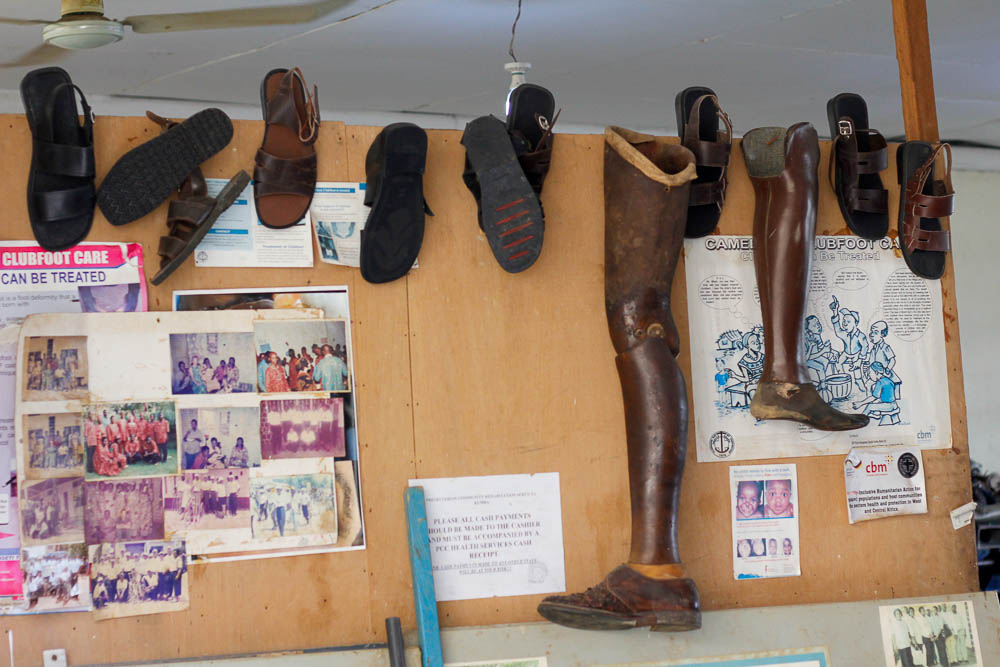
At the heart of this situation, the Presbyterian Community Rehabilitation Services (PCRS) in Kumba provides care to those suffering from stroke-related complications and spinal issues. Physiotherapist Tamanji Ayambu said these health issues have surged due to the stress and violence in the area.
This is evident in the physiotherapy department at PCRS, where 18 to 20 patients come in daily. Many face back pain and spinal problems due to stroke and their physically demanding lives as farmers.
“Because of the situation we find ourselves in, in this part of the country, we have been receiving a lot of casualties. Even stroke attacks have increased due to stress—from the gunshots and people losing their properties,” Ayambu explained. “The next most common issues after stroke are people with lower back pain, starting from the neck down, because many of the people are farmers. They constitute about 30 per cent of our patients.”
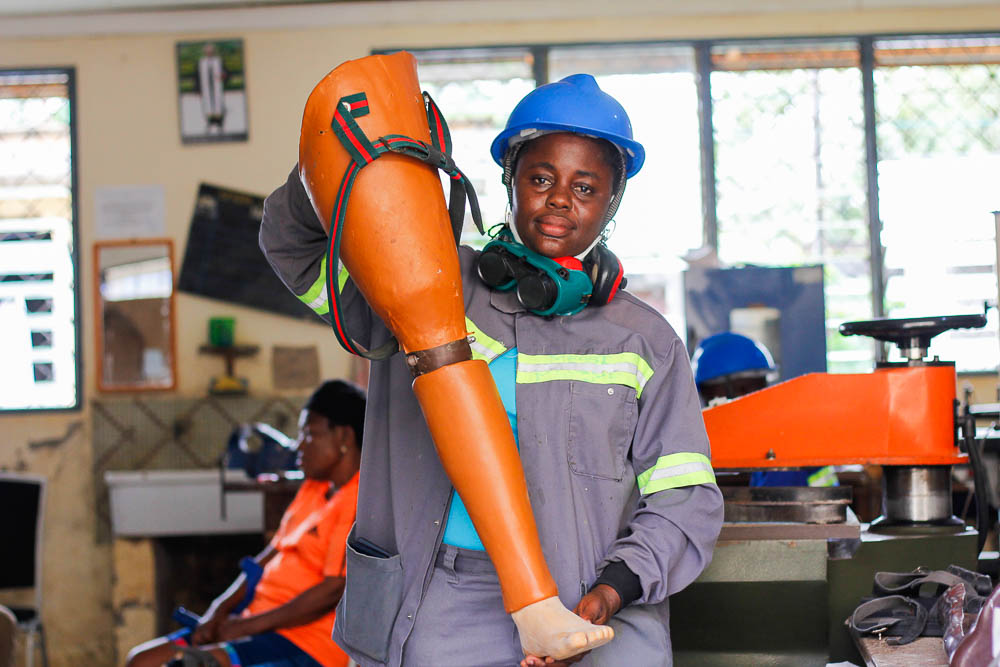
Amidst the crisis, a dedicated team at PCRS Kumba is committed to restoring hope. Among them is Maxim Messi, the facility’s only female orthopaedic technician since it became operational in 1993. Initially trained as a laboratory technician, Messi transitioned into orthopaedics through internal training after seeing the need to assist persons with disabilities.
“I feel delighted to serve humanity,” Messi shared. “Most people with disabilities think that when they are disabled, they are left behind in society, but I am here to make them feel they still have hope.”
She describes her career shift as challenging, but a passion to serve kept her going. “At the start, it was very difficult because I did not have any formal training. But with the help of my supervisor and his assistance, I went through internal training.”
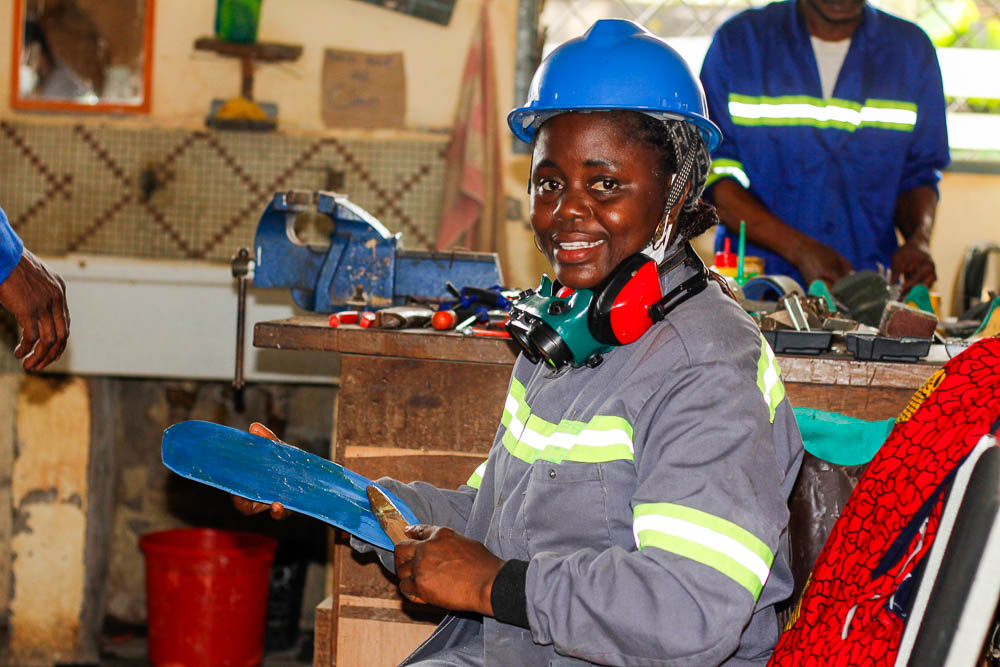
After spending eleven months at the facility, Messi can now produce various devices that help people who have lost a limb to walk again. “I can produce calipers and orthopaedic boots. I feel delighted serving humanity in this domain.”
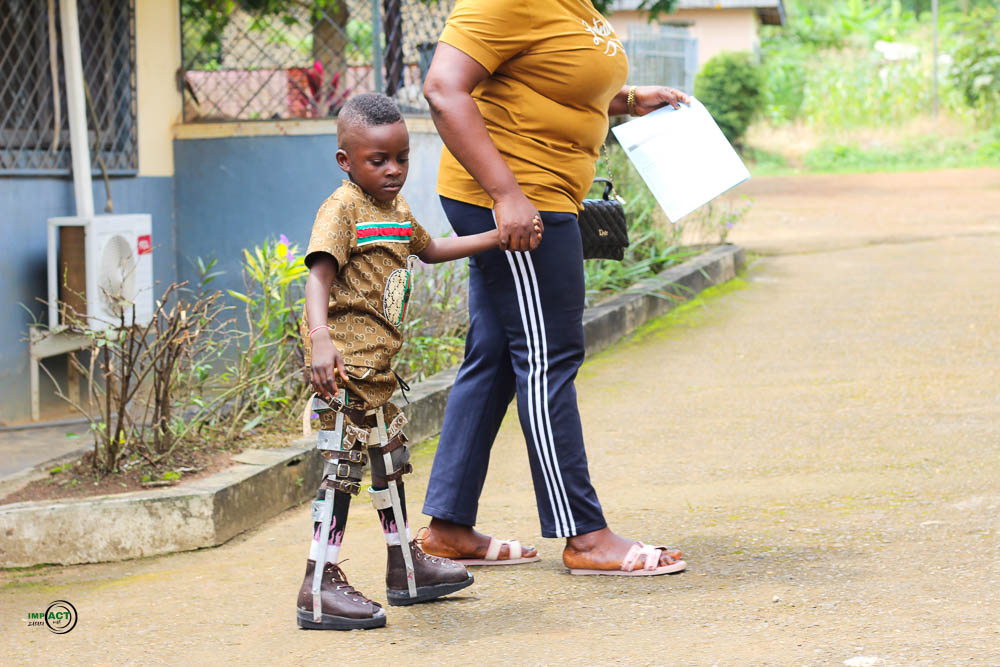
One of her youngest clients is Ekoko Celestine, a boy born with a leg deformity called genu valgum, commonly known as knock knees. Thanks to the expertise of Messi and her colleagues, Celestine is guaranteed to walk normally again.
His mother, Claris Titangi, is overjoyed to see her son regaining his mobility. “I have been here for two months. It started with a plaster of Paris (POP) cast to soften the bones, and this is the caliper they have handed over to us. I really feel good and happy because it is not easy to see your child grow up with bent legs.”
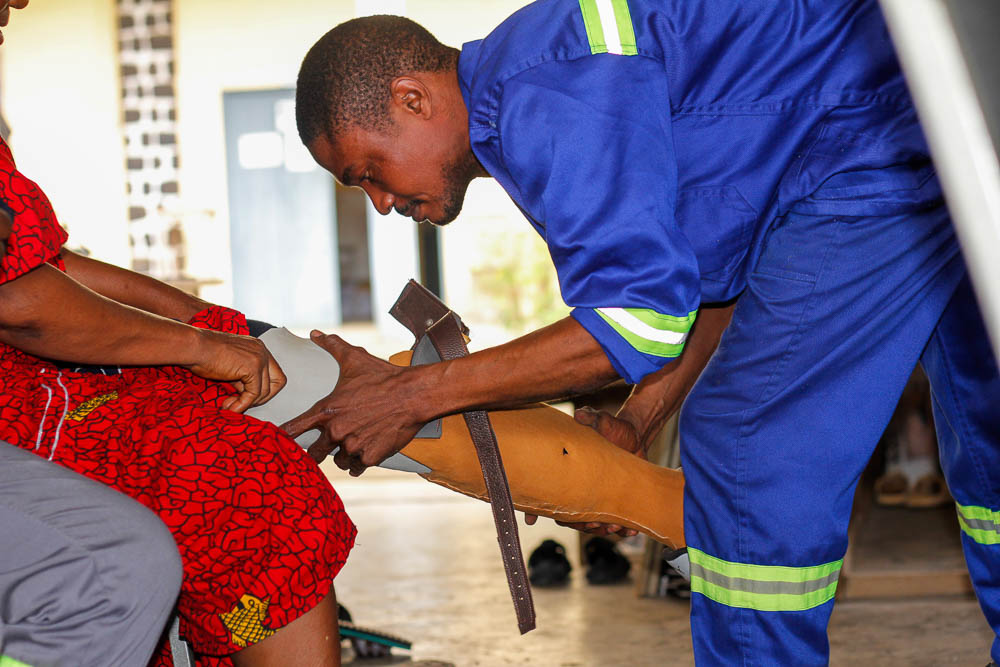
In conflict zones, the proportion of people with disabilities is often significantly higher due to the direct effects of violence and the destruction of infrastructure. Conflicts cause injuries, amputations, and long-term disabilities, while also worsening access to medical care and rehabilitation services.
Globally, persons with disabilities are disproportionately affected by conflict. In 2024, the World Health Organisation estimates that serious, life-changing injuries requiring continuous rehabilitation account for about 25% of the total number of injuries.
While the conflict in Anglophone Cameroon continues, Messi and her colleagues at PCRS Kumba are working to restore hope to those already affected—starting by providing one prosthetic, for one person, at a time.