
By Boris-Kaloff Batata
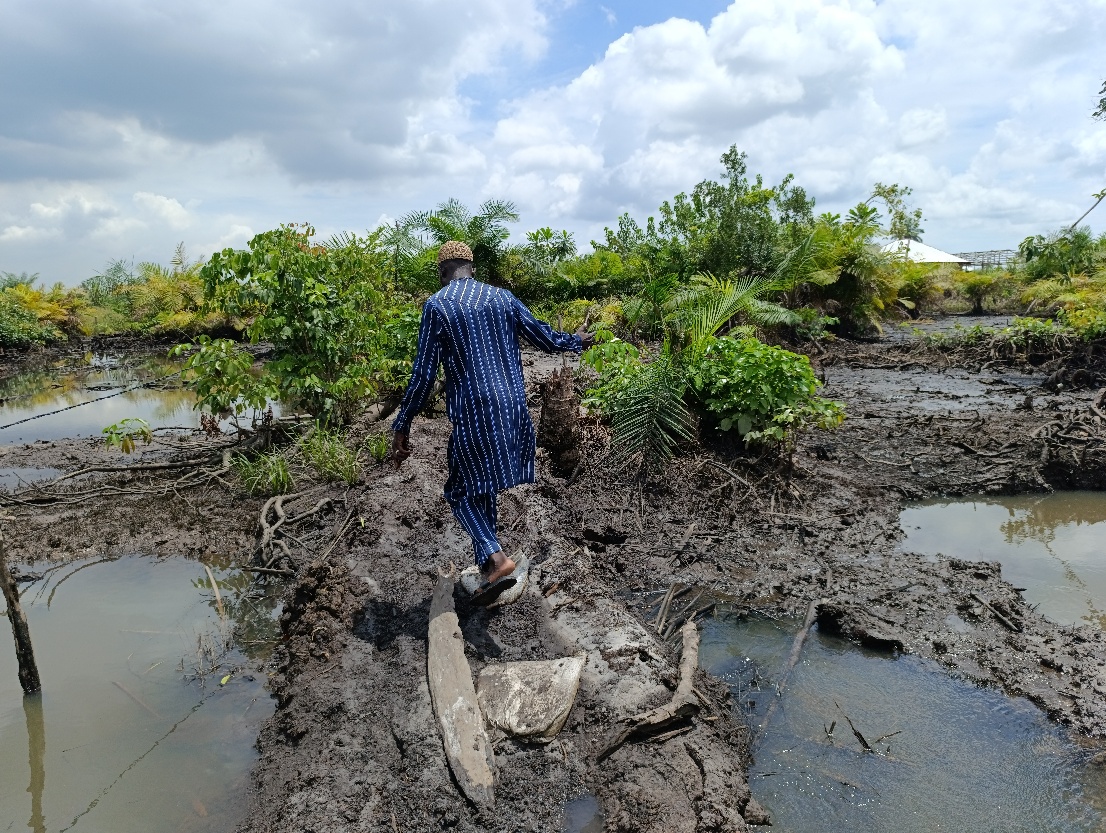
“When I came here, this environment was still very bushy. There were trees, wild animals, and a lot more,” recalls Olando Jemu, describing his first experience of a settlement known as Towo Plage in Bonendalle village, in the Douala IV municipality of Cameroon’s Littoral region.
Jemu is now the leader of this newly emerged settlement. He further explained that accessing the area was difficult because the place was covered with mangroves.
“It wasn’t even easy to get into this area. We used planks to cross over, but with time, I used the planks to construct my three-room house before I started thinking of making the road motorable.”
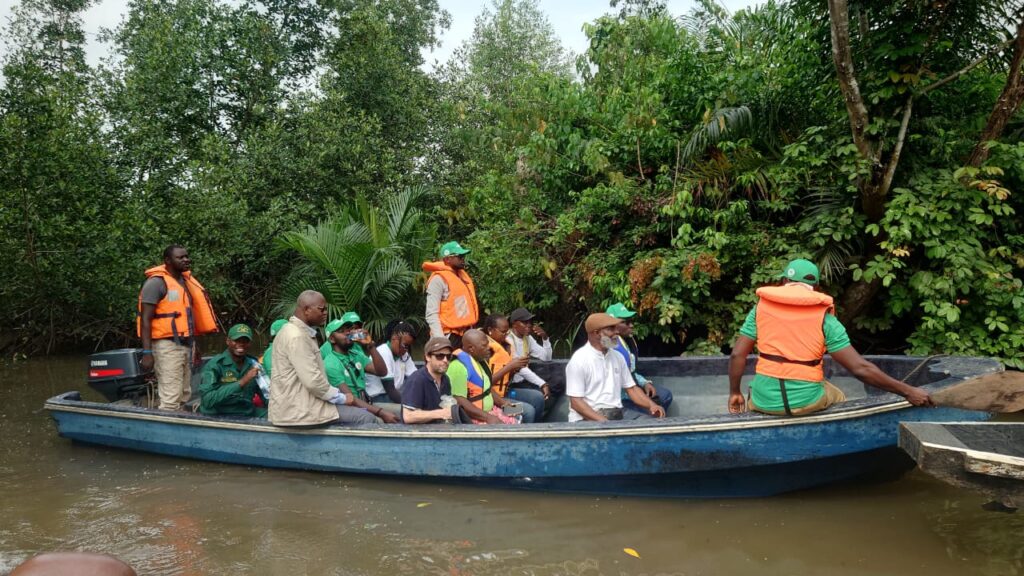
This development has come at a devastating cost to the local mangrove ecosystem. While travelling to the location, the vast area formerly covered by mangroves was evident; they have been cleared to make way for housing. The presence of the remaining mangrove stems is proof.
Aside from the rise of new settlements, the Douala mangroves face over-exploitation for fishing, hunting, and especially logging for firewood and charcoal. According to research titled “Logging activities in mangrove forests: A case study of Douala, Cameroon,” approximately 1,000 hectares are destroyed annually. Species of the genus Rhizophora are mostly exploited, with about 200,000 trees cut down per year.
The Mangroves Atlas of Cameroon points out that 30% of the country’s 400km of coastline is covered by mangroves, stretching from the border with Nigeria in the north to Equatorial Guinea in the south. But between 2000 and 2015, these mangroves declined by 7.9%, from 254,513 hectares to 234,294 hectares—a loss of 20,220 hectares, or about 0.5% per year.
Globally, mangroves are being compromised for development and urbanisation. The UN Environment Programme states that the total area of mangroves worldwide fell by more than 5,000 square kilometres (over 3%) between 1996 and 2020.
The Importance of Mangroves and the Dangers of Cutting Them Down
Discussing the significance of the mangrove ecosystem, environmental and community development advocate Manzo Nzumafo explained that “mangroves are a very important ecosystem because they host a wide variety of species, both plant and animal.”
Nzumafo added that most fish species lay their eggs in mangroves and that about 39 different varieties of crab species grow in them. She went on to reiterate that since mangroves are resistant to high tides, they withstand strong currents, thereby reducing floods.
It is evident that when mangroves are destroyed, the coastline is exposed to ocean waves.
Oceanographer Dr Lucrece Djeumeni says, “When the mangroves are destroyed, the waves come with all their energy to the coast, thereby causing erosion and flood since there is no barrier to prevent the waves from crashing onto the shore.”
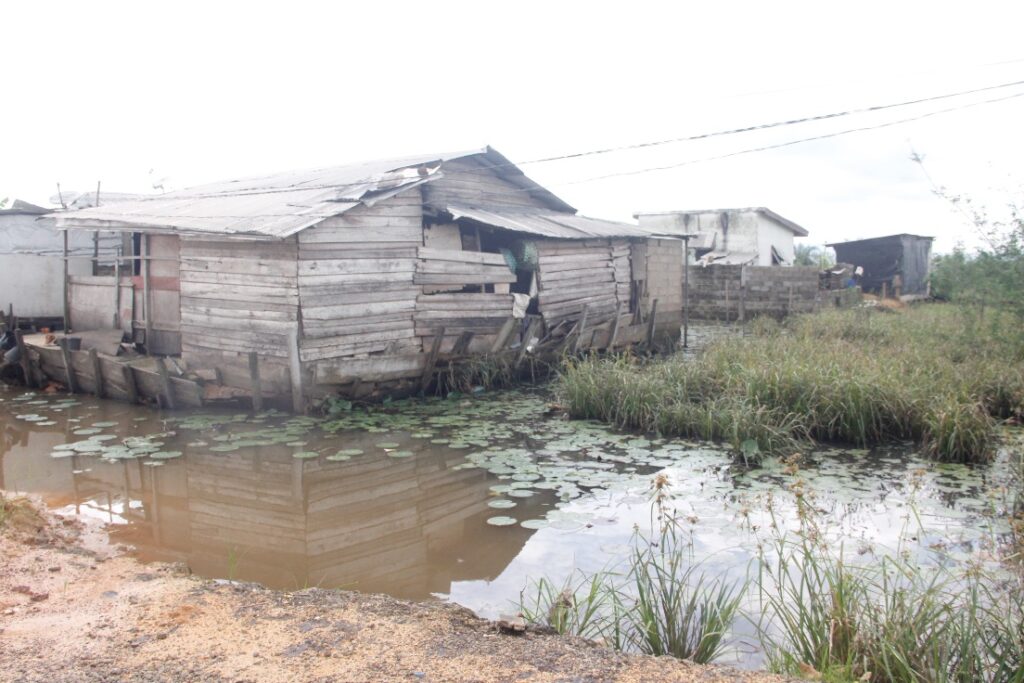
The points advanced by the experts are clearly seen in Towo Plage, where houses are submerged in water, yet the people who live there find it comfortable.
One of the residents spoke of the comfort the place offers. “I have stayed here for seven months, inspired by my husband. Life is good here because it is not congested.”

As a new settlement, Towo Plage lacks basic social amenities like toilets and electricity. The lone health facility does not even have beds for patients, yet people visit the single-room structure almost daily for consultations due to illness.
“When I arrived here, I noticed there was no health facility, so I decided to volunteer my services to help the community. The roads are not good, so it is not easy to get someone across when they are sick,” explained Nurse Lidy, while trying to administer a drip to a sick child.
Aside from preventing coastal erosion and floods, mangroves also contribute to the fight against climate change by acting as a carbon sink.
“These mangroves are very important to us humans, especially those inhabiting the coastline, because when the water comes, the mangroves help to protect the coast. Also, we are looking at the aspect of climate change because mangroves store four times more carbon than normal forests, so they are very important for carbon capture,” stated Clifford Nchia, a disaster risk manager.
Restoring Mangroves in Douala IV Municipality
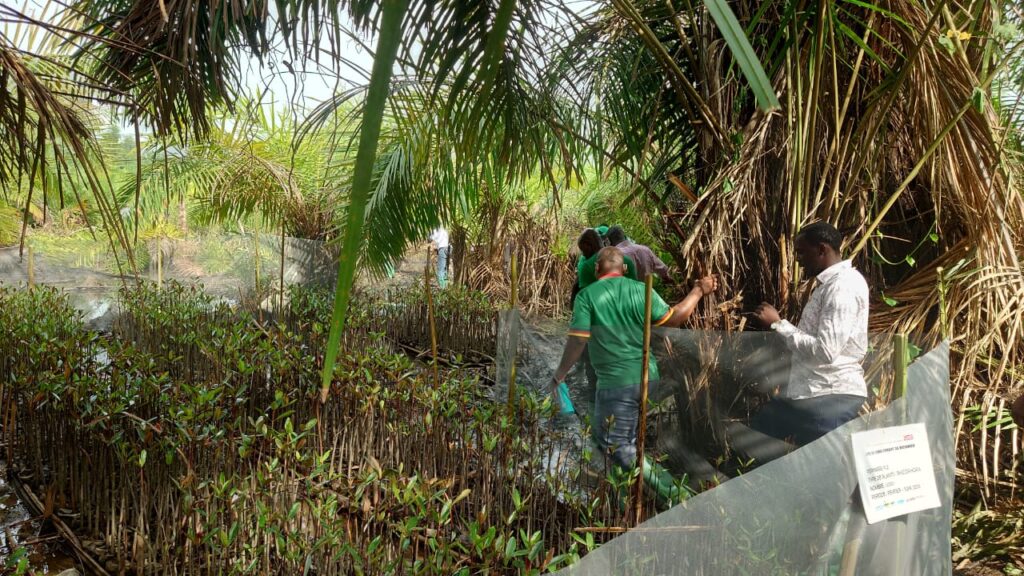
Owing to the impending dangers of the rapid decline of the mangrove ecosystem, municipalities are racing to regenerate this vital ecosystem through various projects. One such project in the Douala IV municipality is known as “Generation Restoration.”
The Communication Officer for Douala IV, Geraldine Mafo, and her team disclosed that the council is implementing this project in multiple phases, aiming to replant the lost mangroves. The council is working in collaboration with traditional authorities.
It should be noted that Douala IV Council spans nine different villages, including Sodiko, Bojongo, Bonamatoumbe, Bonendalle I, Bonendalle II, Bonassama, Jebale I, Jebale II, and Bonambappe.
The “Generation Restoration” project is “following up on the state of the mangroves and trying to find a solution so they will not be completely destroyed by the population,” said the project’s focal point, Musima. To achieve this, a mangrove management authority was set up in March 2025 during a multi-stakeholder workshop. At the end of the project implementation, Douala IV Council hopes to restore three hectares of mangroves.