
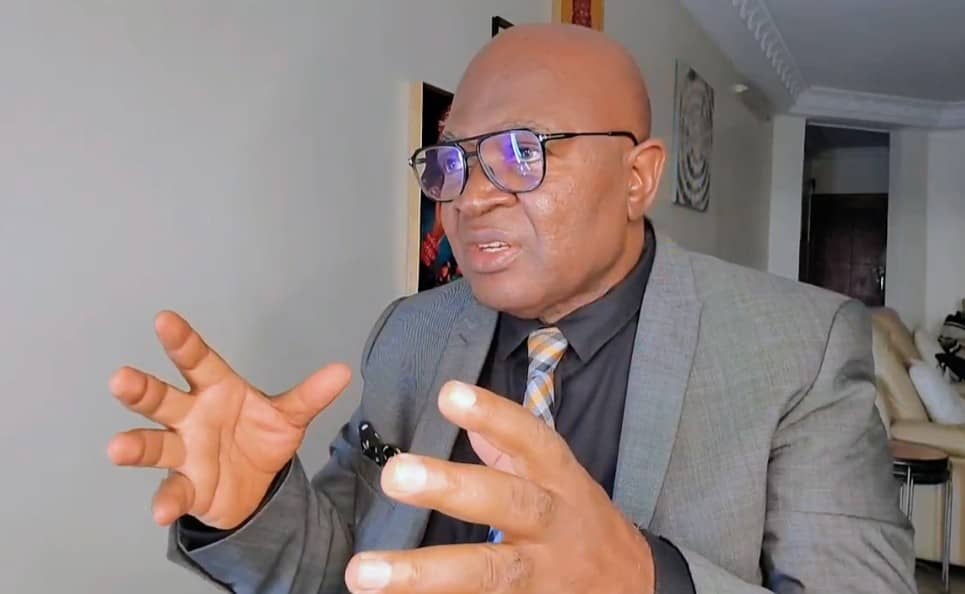
Dr. Nick Ngwanyam has called on Cameroonian authorities to seize the current moment, and usher in frank dialogue to resolve the nation’s escalating post-election crisis. He cautions that failing to do so honestly risks a catastrophic repeat of the government’s mismanagement of the Anglophone problem, which has plunged the country into a devastating conflict since 2017. His appeal comes amid a volatile political climate where the main opposition challenger, Issa Tchiroma Bakary, maintains from exile that he rightfully won the October 2025 presidential election and is the country’s legitimate president.
In a recent interview, Dr. Ngwanyam an entrepreneur and analysts begins not with politics, but with a profound vision for the nation. “I want a nation that is peaceful. I want a nation that is united. I want a nation where we all live to the spirit of Ubuntu,” he states, painting a picture of a Cameroon built on shared pain, joy, and wealth. His ideal is a society where every citizen can meet their basic needs and achieve self-actualisation, ultimately transcending personal ambition to help others grow. This vision stands in sharp contrast to the current reality he describes, where “the resources and opportunities belong to a chosen few, and the majority is left out.”
The root of the present political tensions, Ngwanyam argues, is systemic and multifaceted. He identifies a toxic combination of poor governance, entrenched corruption, and a marginalised populace. “A large part of the population of 30 million is marginalised,” he notes, pointing to a system where privilege is reserved for family and friends of those in power. This has created a “bag of crises” encompassing everything from poverty and crumbling infrastructure to a broken education system that produces graduates lacking in character and practical skills.
The 2025 election, he suggests, became a focal point for accumulated public frustration. “People were looking forward to a change so that probably new persons with a new mindset and new ways of solving problems could come in,” he observes. The contested outcome, widely criticised by civil society and international observers, has therefore “generated a lot of anger”.
Central to Dr. Ngwanyam’s argument is the parallel with the ongoing Anglophone conflict, now in its ninth year. He recalls the 2019 Major National Dialogue convened by the government with hope, but dismisses its outcome. “I cannot call what happened in Yaounde a dialogue,” he says, echoing sentiments expressed by others who noted the critical issue of “the form of the state” was deliberately excluded. “They chose the path of doing a monologue and talking among themselves, their friends and kids.”
This failure of genuine engagement, he implies, is a primary reason the conflict has persisted, claiming over 4,000 civilian lives since 2016 and creating a severe humanitarian crisis.
Genuine Dialogue Built on Truth
To Dr. Ngwanyam, the government must engage in authentic dialogue with all aggrieved parties. “The best way of solving the grievances is to engage people and then dialogue… and negotiate. Get an understanding, agree on what should be done and what should not be done. Reset the club, and do so in truth and love and respect and move forward.”
Dr Nick Ngwanyam emphasises that this process requires courage and honesty. “In facing the truth you must be… very, very candid about it. We must speak truth through our words… when we don’t address the issues, things… it’s very important that truth and love set the standard for our action going forward.” He stresses that understanding how complex national systems work is key to solving their problems, as “when you touch one thing, it moves around the other things.”
Dr. Nick Ngwanyam’s analysis presents Cameroon with a critical choice. The path of monologue, exclusion, and suppressed truth led to a protracted war in the Anglophone regions. The nation now faces another seismic fracture along political lines following the disputed 2025 polls. His plea is for leaders to learn from recent history and choose a different route: one of brave, inclusive, and truthful dialogue.