
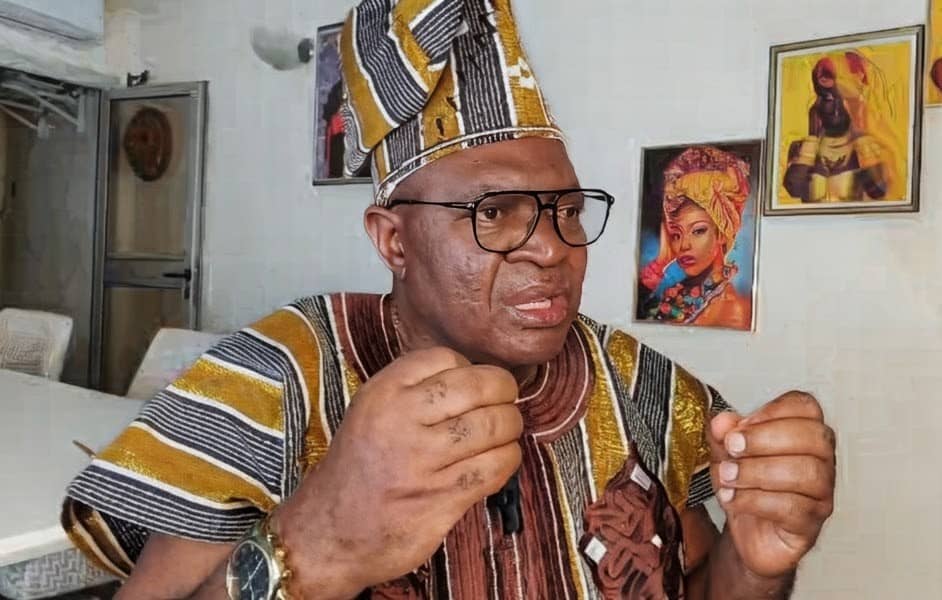
Today is the 7th of December 2025, and I am recording this video to clarify a few points. A few days ago — perhaps three or four — I put out a statement in which I tried to explain certain matters. However, English is not our first language here, and I realise that some of the words I used were misunderstood by many people.
There are Anglophones who do not have a perfect command of English, and there are Francophones whose grasp of the language is equally limited. When one uses a figurative expression, some take it literally, and that can lead to all sorts of different interpretations.
The particular phrase I wish to address today is my use of the term “red-carpet treatment” in relation to Mr Issa Tchiroma. I employed that expression to convey the idea that we should bring him back — from wherever he currently is — so that we can hold a genuine, inclusive national dialogue in Cameroon. The aim is to resolve the serious political crisis we are facing before it degenerates further.
So let me explain precisely what I meant by “red-carpet treatment”.
Literally, of course, it refers to rolling out an actual red carpet for someone to walk on. We have all seen this at airports when very important foreign guests arrive, or at weddings when a long carpet is laid down the aisle or at the reception. In every culture, a red carpet is a symbol of honour and respect. It is extended to people of significance — whether heads of state, brides and grooms, or indeed anyone we wish to treat with particular courtesy.
That is the sense in which I used the phrase. I was saying that Mr Tchiroma should be received with respect and dignity — not necessarily with a physical red carpet at the airport, but with the warmth, softness, and consideration that every human being deserves. All human beings deserve respect; it is not reserved for ministers or elders alone. If we treated one another with that level of respect in our homes, workplaces, markets, and streets, most of our problems would disappear.
In the context of dialogue, respect is everything. Dialogue means sitting across a table — whether round or square — with someone with whom you have a disagreement, and speaking calmly and openly. Those of us who are married know this well: you cannot resolve a dispute with your spouse without dialogue. Without it, the problem simply festers.
I believe that 80 per cent — perhaps even more — of the challenges we face in Cameroon could be solved through proper dialogue and negotiation. Negotiation is a vital skill that we must all learn and practise.
The Anglophone crisis, for example, could have been resolved peacefully from the very beginning if the principles of dialogue and mutual respect had been applied. Showing respect to one’s opponent is not a sign of weakness; it is a sign of maturity, understanding, love, and strength. Nothing opens the door to successful negotiation more than genuine respect. When the other person feels that respect — when they sense empathy and goodwill — solutions become possible, no matter how wide the original divide.
Dialogue is far more powerful than guns, bombs, or any form of violence. It is always easier to start a conflict than to end one, and it is always easier to put out a small fire than one that has raged out of control. If we address our grievances while they are still manageable, we save ourselves enormous suffering.
Look at the current stand-off between truck drivers and law-enforcement officers in the Meiganga. It is, at root, a very simple issue that could be settled quickly through respectful dialogue. Yet it drags on because each side feels disrespected by the other.
Respect, sincerity, and genuine dialogue — these are the keys. We have countless problems in Cameroon: within families, within government ministries, between communities, between villages. Almost all of them could be resolved if we sat down together in good faith. We also need a peaceful environment if we are to revive our shattered economy. An economy cannot function properly when people are angry with one another. We must work together as teams to rebuild our country — its economy, its development, its politics.
That, I believe, is exactly what President Biya has been advocating: dialogue, understanding, and negotiation — not guns. Guns have never solved a problem”.