

Amid the chaos of Cameroon’s Anglophone crisis, centuries-old traditions are under pressure, but they endure. Even as festivals go silent and children forget their mother tongue, communities are finding new ways to share their culture, keeping their heritage alive despite displacement and the upheaval of daily life.
By Shuimo Trust Dohyee
It’s a calm morning in Nkar, in the Kingdom of Nso, Northwest region of Cameroon. Shuufai Tsemkan Tsen sits in the corner of a wide, earthen room, dressed in a richly patterned blue traditional outfit and a matching cap. Around him, bamboo benches line the walls.
Before him are three calabashes and a clay pot. Two of the calabashes, with their long, narrow necks, hold fresh peace plants, kikeng, as they’re called here. The third calabash has a wide mouth, like the clay pot beside it, both wrapped in green leaves.
Usually, the room is full of family gathered for Sho-o, the traditional ritual of blessing. But today, only a few are present. The rest have fled the ongoing armed conflict now refered to as the Anglophone crisis.
The crisis that began in 2016 as peaceful demonstrations by teachers and lawyers defending their language and cultural rights soon escalated into one of Cameroon’s deadliest conflicts. Their protest against the imposition of French legal and educational systems in the country’s English-speaking regions was met with brutal force, igniting years of violence that have claimed more than 6,000 lives, forced over 900,000 people to flee their homes and another 60,000 to cross borders in search of safety.
Rebels from this part of Cameroon are now fighting to create an independent state from that of Cameroon known as Ambazonia.

Shuufai, who is a traditional ruler and a bridge between the living and the ancestors, begins his incantations. “Wherever they are,” he says of his displaced family, “give them peace. Protect them from harm.”
He calls the names of those who came before and asks for protection over those still living.
“Keep them safe from accidents,” he adds. “And if anyone means them harm, let that evil return where it came from.”
Before him are gifts — palm wine and kola nuts sent from family members who fled the fighting but still hold on to tradition.
One by one, those present step forward, barefoot. Shuufai sprinkles palm wine on their feet, blows gently into their ears, and blesses them with luck and safety.
“Sho-o is sacred,” says elder Tav Emmanuel Ngaiwir beside him. “It has been passed down for generations. Even with this crisis, we must keep it alive.”

Culture in the Crossfire
While the conflict has taken a heavy economic and humanitarian toll on the population, its impact on the indigenous cultures and languages of Anglophone Cameroonians is even more alarming.
“The Anglophone crisis has deeply shaken the cultures of the many ethnic groups that make up Cameroon’s English-speaking regions,” said Professor Emmanuel Yenshu Vubo, a sociologist and anthropologist and Dean of the Faculty of Social and Management Sciences at the University of Buea, Cameroon.
“Public events such as Cultural festivals, traditional marriages, and even funeral rites have been the most affected,” he added.
Take the Nso Kingdom in the Northwest, for instance. Since 2016, the Ngonnso Cultural Festival, a cherished celebration of unity, heritage and the goddess of Nso has not been held. When plans were made to revive it in 2024, separatist fighters swiftly banned it, accusing the Fon (King), Sehm Mbinglo I, of betraying their cause and siding with the central government. It was later postponed, with traditional authorities citing the need to cleanse the land. However, many believe threats from separatist fighters influenced the decision
But the Fon himself is no stranger to the crisis. He was kidnapped four times by separatists. Two of his sons were murdered. Today, the monarch lives in exile in Yaoundé, far from his ancestral palace, while many of his subjects scatter across Cameroon and beyond.
“All those who kidnapped our Fon are dying one after another,” said a Nso notable who requested anonymity. “He is our god. No one defies him and lives.”
The claim could not be independently verified, but it is rooted in Nso cosmology, that the king is sacred.
Hundreds of kilometres away, in Lebialem, Southwest region of Cameroon, the story takes a darker turn. Three traditional chiefs of the Bangwa people were publicly executed and their bodies dumped in a river in 2021. Separatists accused government forces of staging the killings to tarnish their image. But others insist the chiefs were targeted because they refused to share cocoa revenues with the fighters, and for encouraging children to return to school.
“I was driving when I got the call about their deaths,” recalled Zinkeng Fidelis Njukeng, a local mayor who had met the chiefs just hours earlier. “I nearly crashed my car….. In Bangwa land, our chiefs are demi-gods. Speaking ill of them is taboo, killing them is unforgivable. But this crisis has broken all boundaries.”
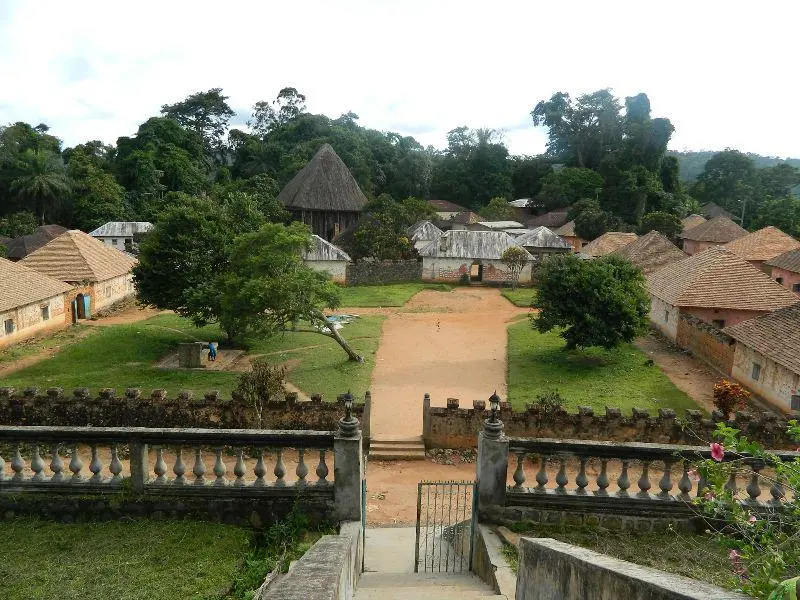
The desecration hasn’t spared other communities. In Bafut, soldiers in search of separatist fighters attacked and looted the royal museum. Repeated attempts to reach palace authorities for comment were unsuccessful. But a 54-year-old Bafut native living in Buea shared his outrage. “It was a sacrilege,” he said, his voice trembling. “Those responsible will pay. The punishment is death. our gods are not asleep.”
In the Balondo area, another chief was dragged out of church and shot, accused of working with government forces. Few KM away in Fako, still in the same region, 8 chiefs were kidnapped allegly by separatists.
To Prof. Yenshu, who is also a traditional ruler, “the crisis has created a space where the authority of traditional rulers no longer matters.
“Now, it’s the guns that rule,” he said.
Beyond the fading authority of traditional rulers in Anglophone Cameroon, Zinkeng fears that the very soul of Bangwa culture is slipping away.
“Our culture is disappearing,” he said. “In our tradition, when a child is born, we bury the umbilical cord beside the graves of their grandparents”
“It ties the child”, he explained “to their ancestral home. No matter where they go, that connection brings them back.”
He paused before adding, “But now, so many of our people have fled. Children born in displacement have their umbilical cords buried in foreign soil”. “Many don’t even speak our dialect anymore.”
Yet, Zinkeng and others are not giving up. “We’re fighting back,” he said in a defiant voice.
In the midst of conflict, his tribal association has launched animated cartoons in Nweh, the Bangwa language, to teach children their language and traditions. They also organise holiday classes for displaced families across towns and cities in Cameroon to offset the effects of the crisis on their culture. Mankon kingdom in the northwest region of Cameroon is also doing same.
Like in Nso, the Bangwa Cultural Festival has not been held since 2016. The insecurity that grips the region has robbed them of more than just celebration, it has cut off an important source of income and unity.
“Those festivals kept us together,” Zinkeng said. “They also brought life to the local economy.”
Keeping Culture Alive in Exile
But displacement, according to Professor Emmanuel Yenshu, has not been entirely destructive.
“It has led to the creation and reinforcement of diasporic communities,” he explained. “The powers of traditional rulers have now extended beyond their local borders.”
Diasporic communities, group of people who have moved or been dispersed from their ancestral homeland yet continue to share a common culture, identity, and enduring ties to their roots — are keeping cultural life alive in new spaces. For Yenshu, this offers a glimmer of hope.
“Even if cultural activities have slowed down back home, these communities continue to celebrate who they are. It’s how culture survives,” he said.
He predicts that over time, this movement will give birth to what he calls “a subculture”, that blends the traditions of these displaced groups with the experiences of their new environments.
That vision is already taking shape.
In 2017, at the height of the crisis, Batholomew Vernyuy fled Nso for Yaoundé.
“I felt lost, separated from my home and my culture,” he recalled. “Then I started thinking.”
By 2020, that thinking turned into Njang Fomonyuymbom, a cultural animation group he created to bring displaced Nso people together through dance and music.
“Fomonyuybom means a gift from the almighty”, he said. “We started with just five members,……Now, we’re more than forty, across different towns in Cameroon.”
What began as a cultural group has grown into something larger, a legal association and a self-help community.
“We now perform at events, not just in Nso language but in others too,” Batholomew said with a sense of accomplishment. “It’s no longer a Nso thing. It’s a mix of different cultures.”
Their performances fund small business grants for members.
“We use what we earn from shows and membership fees to help our people start again,” he said.

A culture reshaped
Professor Yenshu has seen the conflict change not just people’s lives, but their language too.
“Words from Nigeria have become part of how we talk now,” he said. “People say ekelebe for soldiers, odeshi for the bullet proof charms worn by separatist fighters and Okada for motorbikes.”
He explained that these words came from the Igbo people across the border. Nollywood movies had already spread them into daily life, but the crisis made that influence stronger.
The crisis has also deepened intra-ethnic nationalism, according to Prof. Yenshu.
“It has awakened a sense of identity,” he said. “Tribes that were once conquered or absorbed by larger groups are now reclaiming their roots and redefining who they are,” he added.
Interestingly, the Anglophone crisis itself is, at its core, a struggle over identity. These movements are largely fuelled by social media. A Facebook page named Nkar woo Lan has, over time, tried to portray Nkar as an independent kingdom, separate from Nso despite sharing the same language and cultural rites.
“Historically, Nkar was conquered in war by the Nso,” explained Prof. Yenshu, “but the Nso also protected Nkar from invasions by neighbouring tribes.”
Beyond language and nationalism, the war has also blurred moral boundaries.
“Things that were once seen as abominations are now common,” said Prof. Yenshu. In his village in Babanki, some women have been taken by separatist fighters, others left their husbands to join them.
“Some are drawn by the fighters’ money,” Prof. Yenshu said. “It often comes from ransom”.
Before, he explained, “no one could dare take another man’s wife. It was a taboo”.
He says even traditional events now have a cost.
“Every cultural act now has a price tag,” he said. In many Anglophone villages, people used to bury their dead at home, close to their ancestors. But now, with insecurity everywhere, most burials, especially of displaced persons, happen in “foreign land”.
“Fighters demand money to allow burials,” he said. “The same for marriages and traditional rituals. Everything is paid for.”
Zinkeng shares the same worry.
“Marriage used to unite families,” he said of his Bangwa tribe “but now it’s just between two people, mostly in cities.” He remembers how his people were always told to marry within their tribe to keep their identity alive. But today, displacement has changed that. Many now marry outside the tribe.
“It’s good for national unity,” he said. “But it also weakens our roots.”
Still, both men agree that culture has not died. It is changing, sometimes in ways no one expected.
Hope in the ruins
“There’s a lot of resilience and creativity,” Yenshu said with a faint smile. He points to the Toghu — the brightly embroidered fabric unique to the Northwest region of Cameroon, which has now become a national fashion symbol, worn by Cameroonians everywhere and blended into many other cultural wears.
“That’s not by accident,” he said. “It’s partly the product of displacement.”
In the Southwest, people have responded in kind. In the midst of the crisis, they unveiled their own cultural fabric, EYASU, which has quickly gained popularity.

And despite the chaos, hope still flickers. The first Southwest Cultural Festival held in 2024, even as fighting raged in parts of the region, gave Prof. Yenshu reason to believe.
“It showed that our people haven’t given up,” he said. “Our cultures are wounded, but they’re alive, and they’ll endure.”
This work was produced as a result of a grant provided by the Cameroon Association of English-Speaking Journalists (CAMASEJ) as part of a project funded by Open Society Foundations.