
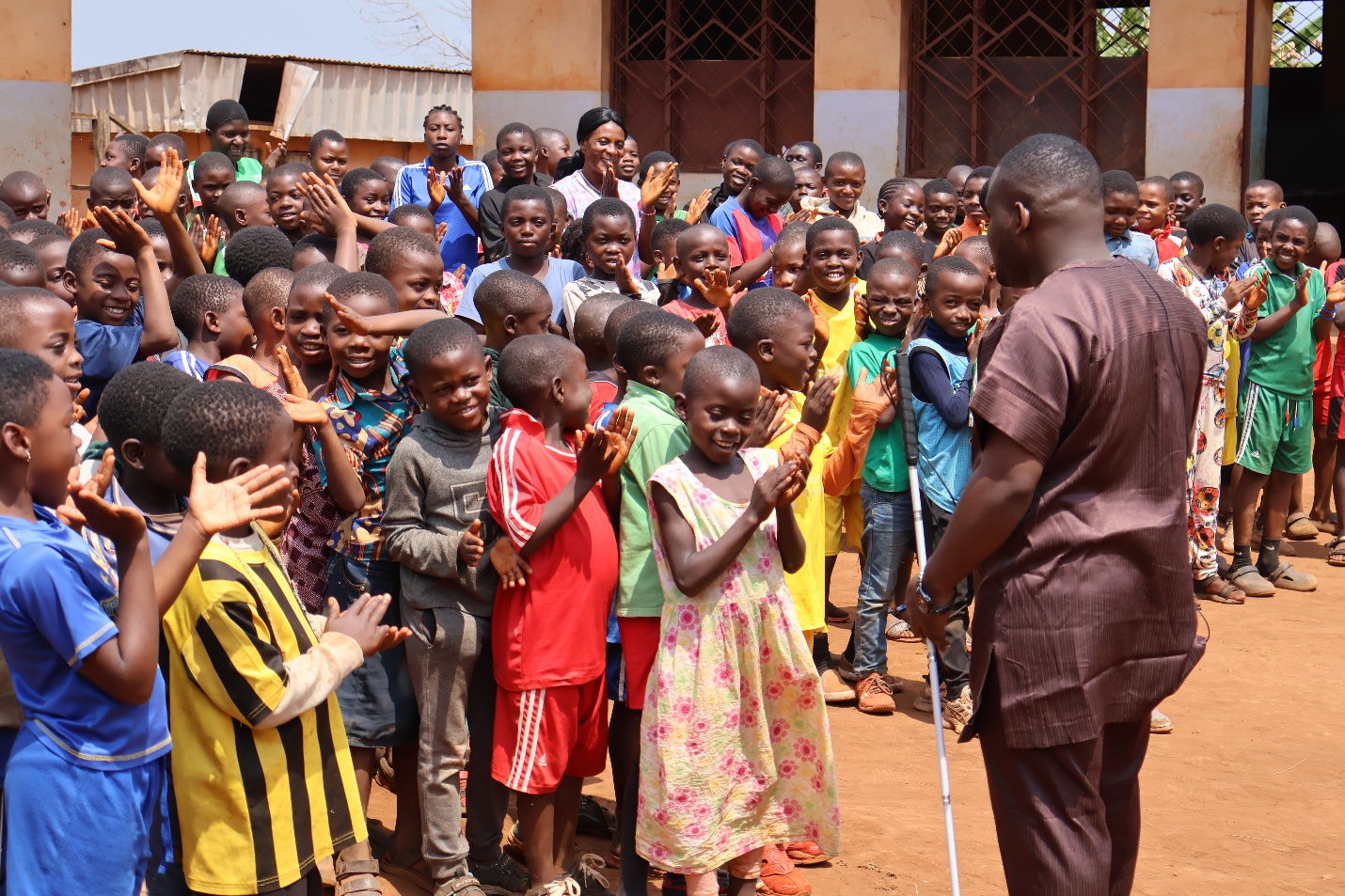
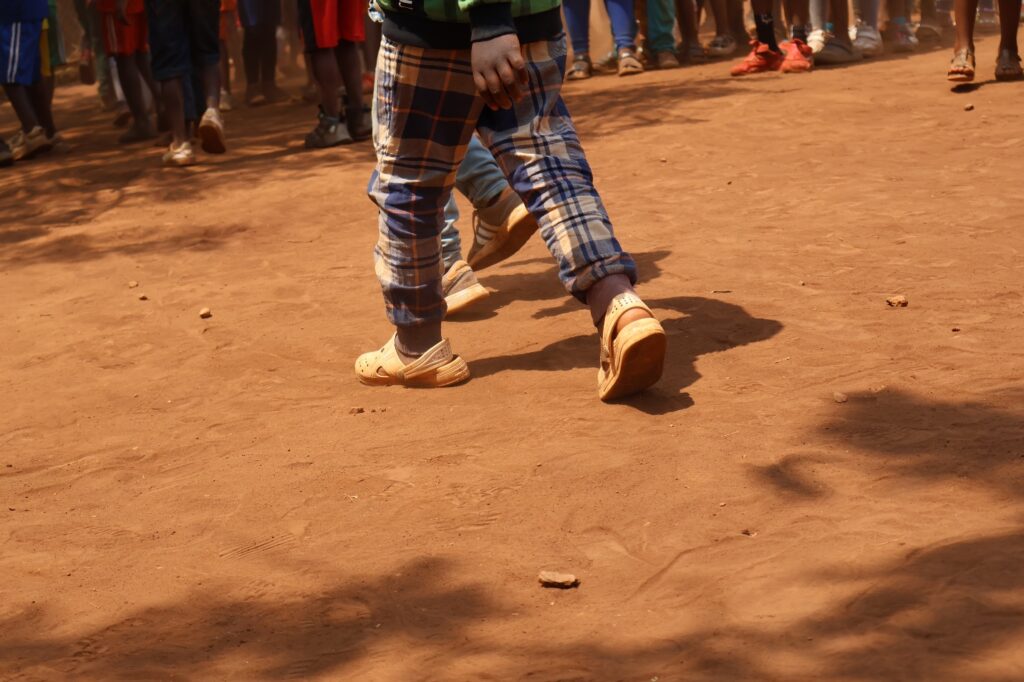
Children race across the dusty compound of Catholic School (CS) Mambu in Bafut, their laughter echoing through the afternoon air. Two decades ago, a visually impaired child walked across this same ground — uncertain, but determined.
Today, Dr Kesah Princely Nfotoh returns not as a struggling pupil, but as a lecturer and journalist, a symbol of possibility. His journey from vulnerability to success demonstrates the transformative power of inclusive education championed by the St Joseph Children and Adult Home (SAJOCAH).
“Growing up, I was told that being blind meant my dreams were also dead. But twenty years ago, I had the chance to sit in class for the first time at Catholic Primary School Mambu,” Dr Nfotoh recalls. “My classmates mocked me because they could not imagine how a blind child could succeed. But those blank books were transformed into Braille sheets, and that was the beginning of my journey to becoming a lecturer.”
At CS Mambu, inclusive education is not merely a concept; it is embedded in the teaching and learning process. The school has a dedicated resource room where visually impaired learners receive specialised Braille training. Pupils who enrol for the first time are introduced to Braille so they can follow lessons alongside sighted classmates.
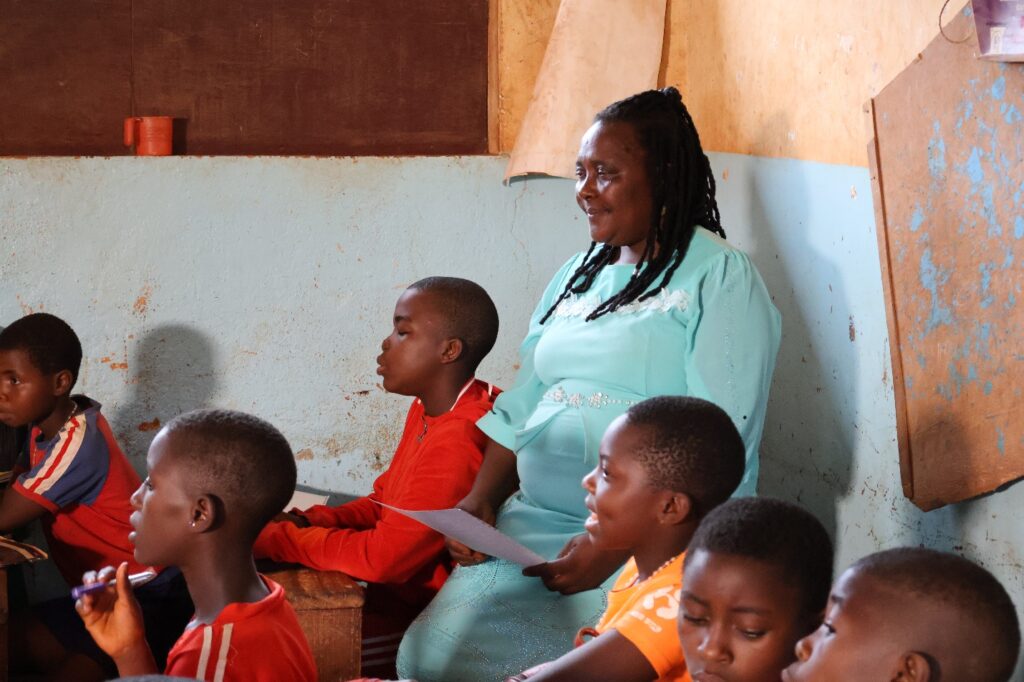
“I follow up the topics taught in class and then transcribe them into Braille, especially Mathematics,” explains Florence Asanji, a Braille instructor at the school. “I give Braille notes to the child so that when the teacher writes examples on the blackboard for sighted pupils, the visually impaired learner can follow using Braille and keep up with the rest of the class.”
Such efforts have inspired learners like Dr Nfotoh, as well as current pupils, to dream beyond the limitations imposed by disability.
One of them is Glory, a Primary Five pupil who already has ambitious plans for the future. “My dream is to become a Braille teacher and open a school for visually impaired children in Buea,” she says. “I also want to employ other teachers who will help teach them.”
Globally, the number of children with disabilities is estimated at nearly 240 million, according to a 2021 UNICEF report. The report also revealed that children with disabilities are 49 percent more likely never to attend school, and significantly more likely to drop out at primary and secondary levels.
In Cameroon, the government has adopted measures to protect the rights of children with disabilities, particularly their right to education. The Constitution and several legal instruments — including Circular No. 283/07/LC/MINESEC/MINAS and Circular No. 08/006/LC/MINESUP/MINAS — safeguard the educational rights of vulnerable learners. Act No. 83/13 further stipulates that families should enrol children with disabilities in mainstream schools, with support from the State.
Efforts to strengthen inclusive education have also received backing from development partners. The Liliane Foundation, through the Cameroon Baptist Convention (CBC), launched the “We Ring the Bell” campaign under the theme School for All: Promoting Education Technology to Advance Inclusive Education.
Professor Emmanuel Yenshu Vubo, Dean of the Faculty of Education at the University of Buea, says the institution has made significant strides in promoting inclusive learning.
“The type of education we provide here does not focus on disability,” he explains. “We ensure that students receive the same academic opportunities. In this faculty, we have successfully trained learners through Master’s and PhD levels so they can become teachers like us.”
The progress seen at CS Mambu and St Joseph Inclusive High School in Bafut is largely attributed to the support of St Joseph Children and Adult Home (SAJOCAH). The institution identifies and accommodates visually impaired children and trains Braille instructors who later assist them in mainstream schools.
Within SAJOCAH is a resource centre where Dr Nfotoh and many others found encouragement and opportunity. Staff such as Chia Elijah ensure learners have access to transcribed textbooks, Bibles and other materials in Braille, enabling them to participate fully in school and community life.
“Before learners begin Braille studies, we first provide counselling,” Elijah explains. “Some stay for a month or two. We then conduct mobility training before introducing them to Braille.”
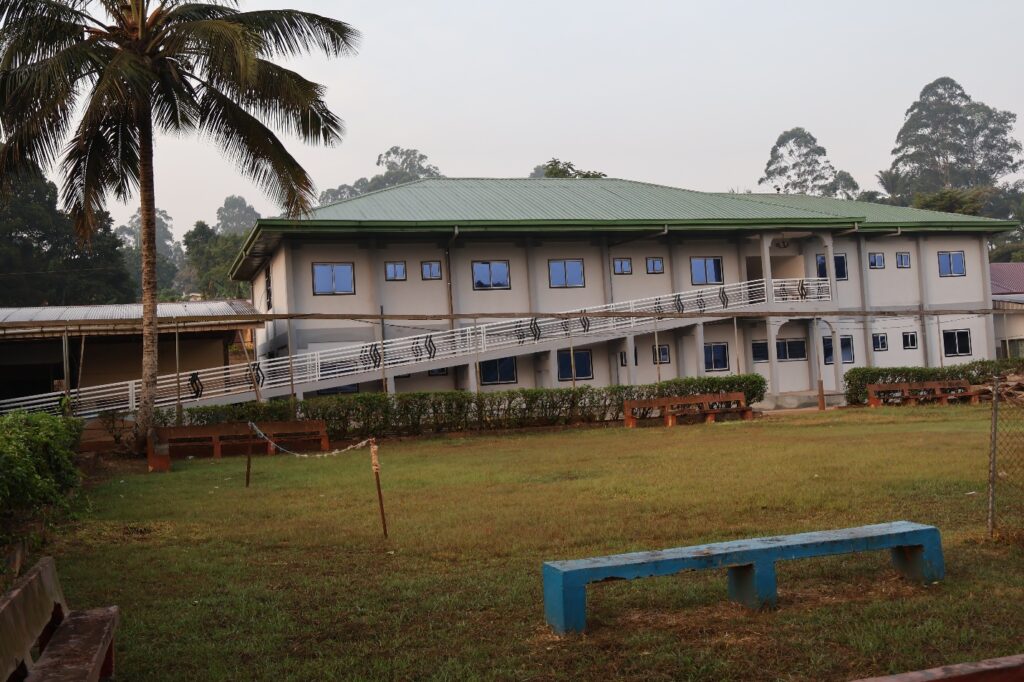
Despite challenges, including insecurity in the area, the centre remains committed to supporting children with disabilities.
“This centre is open to people with different disabilities,” says Sister Saveria Ntenmusi, Directress of SAJOCAH. “It is a place that produces life — helping the lame walk and the blind see through the humble work of the Tertiary Sisters of St Francis.”
The success of inclusive education in Mambu contrasts sharply with global trends. A joint report by the World Bank and the Global Partnership for Education shows that educational gaps between children with and without disabilities have widened over the past three to four decades. In 19 developing countries, only 48 per cent of children with disabilities complete primary school, while nearly three in ten have never attended school.
Yet in Mambu, inclusive structures such as SAJOCAH demonstrate that with deliberate investment and community commitment, these disparities can be reduced.
Dr Kesah Princely Nfotoh’s journey is more than a personal achievement. It is living proof that inclusive education can transform lives.
