
The killing of investigative journalist Martinez Zogo stands as one of the most disturbing human rights cases in Cameroon’s recent history. Beyond the personal tragedy and the pain suffered by his family, the case raises profound questions about the rule of law, the protection of journalists, and the ability of state institutions to hold power accountable.
This is not simply a criminal case. It is a human rights case of national and international significance. At stake are some of the most fundamental legal obligations of the Cameroonian State: the right to life, the absolute prohibition of torture, freedom of expression, and the duty to provide effective remedies to victims of serious violations.
The African Charter on Human and Peoples’ Rights, to which Cameroon is a party, guarantees the right to life and prohibits torture and cruel, inhuman, or degrading treatment. These rights are non-derogable; they admit no exception, even in situations of political tension or national security. Where credible allegations point to the involvement of state security or intelligence services in the arrest, torture, and killing of a civilian, the responsibility of the state is directly engaged.
International human rights law is clear on this point. The United Nations Human Rights Committee has affirmed that states have a positive obligation not only to refrain from unlawful killings but also to conduct prompt, independent, and effective investigations, prosecute all those responsible, and provide remedies to victims and their families. Failure to investigate properly constitutes a violation in itself.
The circumstances surrounding Martinez Zogo’s death, including reports of prolonged torture, secret detention, and the manner in which his body was found, raise serious concerns that go far beyond isolated misconduct. They suggest the possible existence of a system in which security powers are exercised without sufficient oversight, accountability, or respect for human dignity.
This case also directly implicates freedom of expression and media freedom. Martinez Zogo was not an ordinary victim; he was a journalist known for his critical reporting and public commentary. When a journalist is tortured and killed, it sends a powerful and dangerous message to all others who seek to investigate corruption, abuse of power, or public wrongdoing.
African and international standards impose a duty on states to protect journalists from violence, intimidation, and reprisals. The African Commission on Human and Peoples’ Rights has made it clear that attacks on journalists are not only crimes against individuals; they are attacks on society’s right to know. The predictable consequence of impunity is self-censorship, fear, and the erosion of democratic debate.
One of the most troubling aspects of the case has been the choice to place proceedings before a military tribunal. While military courts are not illegal per se, African jurisprudence has consistently warned against their use in cases involving civilian victims and allegations against state agents. Military tribunals are structurally part of the executive and defense establishment, raising legitimate concerns about independence and impartiality.
In several landmark decisions, the African Commission has held that military courts lack the institutional guarantees required to adjudicate serious human rights cases involving state officials. The public perception of justice is as important as justice itself. Where proceedings appear opaque or insulated from civilian oversight, confidence in the outcome is inevitably weakened.
Justice in the Martinez Zogo case cannot be reduced to the conviction of a few operational actors. International law recognizes the principle of command responsibility. Those who ordered, planned, authorized, facilitated, or covered up abuses must equally be held to account. Accountability must reach all levels of responsibility, including within intelligence and political structures, if evidence so warrants.
The African Commission’s General Comment on the prohibition of torture affirms that victims and their families are entitled to truth, justice, reparations, and guarantees of non-repetition. Justice is therefore not only about punishment; it is also about institutional reform. It requires safeguards against arbitrary detention, independent oversight of security services, effective complaints mechanisms, and a culture in which human dignity is respected.
Ultimately, the Martinez Zogo case has become a mirror reflecting the state of the rule of law in Cameroon. It is a test of whether institutions serve the people or shield the powerful. It is a test of whether journalists can speak without fear or must remain silent to survive.
If this case ends in partial truth, selective accountability, or quiet forgetting, the message will be clear: that torture and killing remain tools of governance rather than crimes punished by law. But if it is pursued with courage, transparency, and independence, it could mark a turning point for justice, press freedom, and human rights in Cameroon.
Justice in the Martinez Zogo case is not optional. It is a legal obligation—and a moral one.
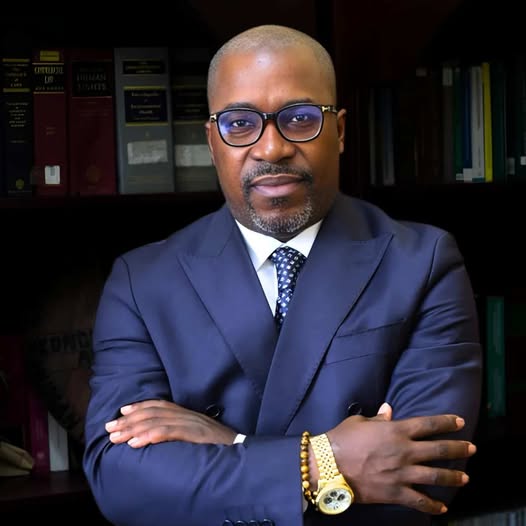
Barrister Nkongho Felix Agbor (“Agbor Balla”) is the President of the Centre for Human Rights & Democracy in Africa (CHRDA).