
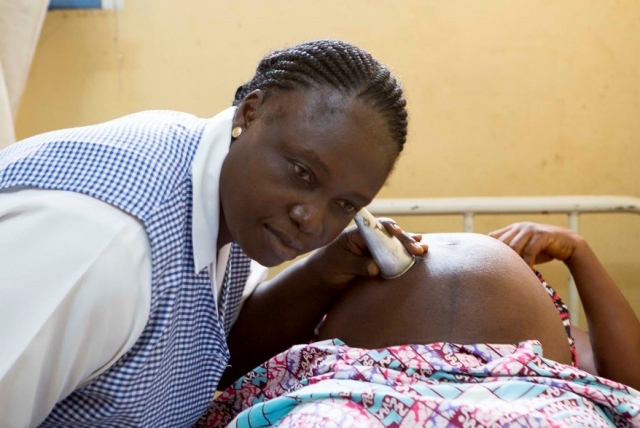
At 3 AM in the Gurei Primary Health Care Centre, Juba, South Sudan, 28-year-old midwife Atto Christine Lino watches another woman struggle through labor. In the dim light, with limited supplies and no backup, she knows the stakes. She’s seen this moment end both ways too many times.
“It is always a very painful experience, working with mothers and witnessing the immense pain they endure during childbirth,” Lino told the World Health Organization earlier this year. “Some manage to deliver safely despite the pain; others can lose their lives in the process.”
Her words capture a crisis playing out across Central Africa, where maternal mortality rates remain stubbornly high or in some cases, catastrophically so, despite decades of global health improvements. In South Sudan and Cameroon, the statistics tell a story of healthcare systems failing the women who need them most.
The numbers are stark: South Sudan records 1,223 maternal deaths per 100,000 live births, according to the most recent World Health Organization data from 2025. That’s seventeen times higher than the WHO’s 2030 target of fewer than 70 deaths per 100,000 births.
Two Countries, One Crisis
More than 2,200 kilometers apart, South Sudan and Cameroon face dramatically different contexts but share a common emergency: women are dying in childbirth at rates that should be unthinkable in the 21st century.
South Sudan: The World’s Fifth-Deadliest Place to Give Birth
South Sudan’s maternal mortality rate of 1,223 deaths per 100,000 live births makes it the fifth-highest in the world, according to UNFPA. Complications during pregnancy and childbirth rank as the leading cause of death among women of reproductive age in the country.
The statistics reveal a healthcare system in crisis. With only 3,000 midwives serving a population of 11 million people, according to Voice of America reporting from August 2024, South Sudan faces a severe shortage of the very professionals who could prevent these deaths. That translates to one midwife for every 3,667 people, a ratio that health ministry officials acknowledge is woefully insufficient.
The consequences are measured in lives lost. Only one in five births in South Sudan involves a skilled healthcare worker, meaning 80% of women deliver without professional medical assistance. Research consistently shows that birth in health facilities with skilled attendants dramatically lowers maternal mortality risk.
Dr. Humphrey Karamagi, WHO Representative to South Sudan, described the country’s maternal mortality rates as “unacceptably high” in April 2025 remarks on World Health Day. “South Sudan is at a defining moment in pursuit of fair access to healthcare,” he said, highlighting maternal and child health as critical priorities.
Cameroon: Stagnation in the Face of Global Progress
While Cameroon’s maternal mortality ratio appears less dire, ranging from 258 to 406 deaths per 100,000 live births depending on the data source, the trend line reveals a troubling reality: unlike most of the world, Cameroon has seen no decline in maternal mortality over the past 25 years.
The World Bank’s Gender Data Portal records Cameroon’s 2025 maternal mortality ratio at 406 deaths per 100,000 live births. More recent estimates suggest improvement to 258 deaths per 100,000, but even this represents a rate nearly four times higher than the WHO’s 2030 target.
Research published in BMC Pregnancy and Childbirth documents significant geographic inequalities within Cameroon, with stark differences between northern and southern regions. The study, titled “Ratios and determinants of maternal mortality: a comparison of geographic differences in the northern and southern regions of Cameroon,” reveals that rural areas, particularly in the north, face dramatically higher maternal death rates.
A 2021 study published in PubMed analyzing the 2018 Cameroon Demographic and Health Survey identified multiple barriers preventing skilled birth attendance: social factors, economic constraints, regional disparities, and cultural practices all contribute to women delivering without professional medical care. The rural poor face particularly acute challenges accessing maternal healthcare services.
At the Muyuka District Hospital in Cameroon’s Southwest Region, General Practitioner Dr. Pascal Nwandum describes the quiet but deadly chain reactions that occur when lower-tier health centers operate beyond their limits.
“District hospitals like ours usually have qualified general practitioners, but not specialists,” he explains. “When a case becomes complex, we refer to higher-level hospitals, often in other towns. Unfortunately, many referrals happen late because smaller clinics try to manage cases they aren’t equipped for, or patients delay coming due to cost and cultural beliefs.”
He points out that maternal deaths sometimes trace back to “client-centered reasons,” as he calls them, women beginning antenatal visits late or relying first on traditional birth attendants. “By the time they arrive, complications are already advanced,” he says.
In his district, even when patients make it to the hospital in time, infrastructure gaps persist. “We don’t have a functional blood bank, so when there is postpartum hemorrhage following a vagina or emergency operative birth, we must start calling registered community donors one by one. If they live far, that time gap can cost a life.”
Dr. Pascal’s account underscores the complex interplay of knowledge gaps, cultural norms, and systemic shortages driving Cameroon’s stagnant maternal mortality rate.
The Human Cost Beyond Statistics
Behind every maternal mortality statistic lies a family without a mother, children without primary caregivers, and communities losing women in their most productive years.
Midwife Atto Christine Lino’s testimony captures the emotional toll on healthcare workers who witness these preventable tragedies. “Death is high among women who do [give birth without proper care],” she told WHO officials, describing the “sorrowful memories” and “severe challenges mothers go through while delivering babies in South Sudan.”
Her words highlight an often-overlooked dimension of the maternal health crisis: the healthcare workers who remain in these under-resourced systems carry the psychological burden of knowing that many deaths they witness could have been prevented with adequate staffing, equipment, and infrastructure.
The crisis creates a vicious cycle. Healthcare workers facing overwhelming caseloads, inadequate resources, and regular exposure to maternal deaths experience burnout that accelerates turnover and migration. This further reduces the skilled workforce available to provide maternal care, perpetuating the crisis.
Understanding the Systemic Failures
Multiple factors converge to maintain these unacceptably high maternal mortality rates:
Infrastructure Deficits
Health facilities in both countries often lack basic equipment, reliable electricity, clean water, and essential medicines. Women arriving at clinics for delivery may find facilities unable to manage complications, forcing emergency referrals that consume precious time.
Dr. Pascal’s experience at Muyuka District Hospital reveals how infrastructure deficiencies directly intersect with workforce strain. “We rely on standby generators, thanks to our director and hospital management, because power outages are frequent,” he says. He notes that staffing remains a chronic issue: “There are available nurses but not enough for the size of the population. We’ve managed to secure some local hires thanks to supportive leadership, but burnout still happens, especially for the on-call night shifts doctors.”
Geographic Barriers
Rural women face the double burden of distance from health facilities and poor transportation infrastructure. In emergencies requiring surgical intervention, the hours needed to reach capable facilities can mean the difference between life and death.
Research on Cameroon specifically identifies geographic location as a significant determinant of maternal mortality outcomes, with northern and rural regions experiencing substantially higher death rates than urban areas in the south.
Healthcare Worker Shortages
The shortage of trained midwives, obstetricians, and emergency care providers represents perhaps the most critical factor. South Sudan’s ratio of one midwife per 3,667 people falls catastrophically short of international standards. While Cameroon’s healthcare workforce data remains less precisely documented, the stagnant maternal mortality rates suggest similar severe shortfalls in skilled birth attendants, particularly in rural areas.
Economic Constraints
Women and families facing poverty often delay or forgo facility-based delivery due to costs associated with transportation, delivery fees, and potential complications. Even where services are officially free, informal payments and indirect costs create barriers.
The 2021 study on Cameroon found that economic factors ranked among the top barriers preventing women from accessing skilled birth attendance, with the poorest women least likely to deliver with professional assistance.
Regional Context: Africa’s Unfinished Maternal Health Revolution
South Sudan and Cameroon’s struggles reflect broader challenges across sub-Saharan Africa, though their rates exceed regional averages.
While global maternal mortality has declined significantly over the past three decades, sub-Saharan Africa continues to account for roughly two-thirds of all maternal deaths worldwide. The region’s average maternal mortality ratio, while lower than South Sudan’s catastrophic rate, remains far above global averages and even further from WHO targets.
What distinguishes South Sudan and Cameroon is the combination of high absolute numbers and lack of improvement. As most countries, even other resource-constrained nations have achieved meaningful reductions in maternal deaths, these two countries demonstrate what happens when healthcare systems remain chronically under-resourced and inadequately prioritized.
The Path Forward: Evidence-Based Solutions
Reducing maternal mortality in South Sudan and Cameroon requires comprehensive approaches addressing multiple systemic failures simultaneously. Research and international experience point to several critical interventions:
Expand and Support the Healthcare Workforce
Increasing the number of trained midwives and skilled birth attendants represents the single most impactful intervention. South Sudan’s current ratio of one midwife per 3,667 people requires dramatic expansion, the health ministry has acknowledged the current workforce is insufficient, but translating that acknowledgment into funded training programs and retention strategies remains incomplete.
Retention proves as critical as training. Healthcare workers need competitive compensation, safe working conditions, career advancement opportunities, and adequate support systems to prevent the burnout that drives workforce attrition.
Invest in Rural Healthcare Infrastructure
Geographic inequality demands targeted investment in rural health facilities. This means not just building structures but ensuring reliable electricity, clean water, essential equipment, ambulances for emergency transport, and communication systems to coordinate referrals.
Cameroon’s documented north-south divide in maternal outcomes demonstrates that national statistics can mask severe regional crises. Solutions must address these geographic disparities directly rather than assuming improvements in urban centers will somehow benefit rural populations.
Remove Financial Barriers to Care
Making maternal healthcare genuinely free at point of service including eliminating informal payments reduces economic barriers that disproportionately affect poor women. This requires adequate government funding to compensate facilities and providers for services rendered.
Strengthen Emergency Obstetric Care
Many maternal deaths result from complications requiring surgical intervention, particularly hemorrhage, eclampsia, and obstructed labor. Ensuring that facilities can provide emergency obstetric care, or can rapidly transfer patients to facilities that can, directly reduce preventable deaths.
From his perspective, Dr. Pascal sees clear opportunities for change. “If we had a functional blood bank, many postpartum hemorrhage cases could be saved,” he emphasizes. He also calls for continuous in-service training to help health personnel recognize their scope of competence and refer early. “Sometimes deaths happen because facilities hold onto cases too long instead of referring promptly,” he says.
He believes the government’s proposed Universal Health Coverage scheme could also be transformative if fully implemented. “When maternal and child health services are covered, more women will seek skilled care without worrying about cost. It’s a big step toward prevention.”
His pragmatic tone carries both urgency and hope: “We can’t stop every tragedy overnight,” he says, “but we can build systems that make surviving childbirth the rule, not the exception.”
Community-Level Interventions
Training community health workers to identify pregnancy complications early, promoting birth preparedness planning, and improving community awareness of danger signs can help ensure women reach facilities when complications arise.
Research on Cameroon identified cultural factors as barriers to skilled birth attendance. Community engagement that respects local practices while promoting facility-based delivery can help bridge this gap.
The Stakes: Lives in the Balance
Every year that passes without meaningful action means thousands more preventable maternal deaths in South Sudan and Cameroon.
For South Sudan, where complications during pregnancy and childbirth represent the leading cause of death for women of reproductive age, maternal health isn’t a side issue, it’s a fundamental determinant of whether women survive their childbearing years.
For Cameroon, 25 years without improvement despite global progress reveals policy failures that demand urgent course correction. The existence of significant internal disparities with some regions experiencing far higher mortality than others, demonstrates that improvement is possible with adequate resources and political will.
The WHO’s 2030 target of fewer than 70 maternal deaths per 100,000 births may seem impossibly distant for countries currently experiencing rates 17 times higher. But that target represents what’s achievable when healthcare systems prioritize maternal health, invest in skilled providers, and ensure every woman can access quality care during pregnancy and childbirth.
Midwife Atto Christine Lino continues her night shifts at Gurei Primary Health Care Centre, working with limited resources to prevent the deaths she’s witnessed too often. “It is always a very painful experience,” she said, describing the mothers she cares for.
The question facing South Sudan, Cameroon, and the international community is whether that pain will continue defining the experience of pregnancy and childbirth in these countries, or whether meaningful action will finally match the decades of rhetoric about maternal health as a human right.
The data is clear. The solutions are known. What remains uncertain is whether political will and resources will align to save the lives hanging in the balance.
About This Investigation
This investigation draws from World Health Organization data (2025), UNFPA country reports, World Bank Gender Data Portal, peer-reviewed research, and verified media reporting from Voice of America and Eye Radio. Maternal mortality figures represent official estimates and may undercount actual deaths due to incomplete vital registration systems in both countries. Healthcare workforce calculations use population-to-provider ratios based on reported totals (3,000 midwives for 11 million people = 1:3,667). Where data conflicts existed between sources, the most recent and authoritative source was prioritized. All statistics reflect the most recent verified data available at time of publication.
Author’s Note
This WanaData story was supported by Code for Africa and the Digital Democracy Initiative as part of the Digitalise Youth Project, funded by the European Partnership for Democracy (EPD).
