
A new conservation coalition aimed at rescuing the critically endangered Cross River gorilla from extinction has been officially launched in Buea, with stakeholders warning that the species could disappear within decades if urgent action is not taken.
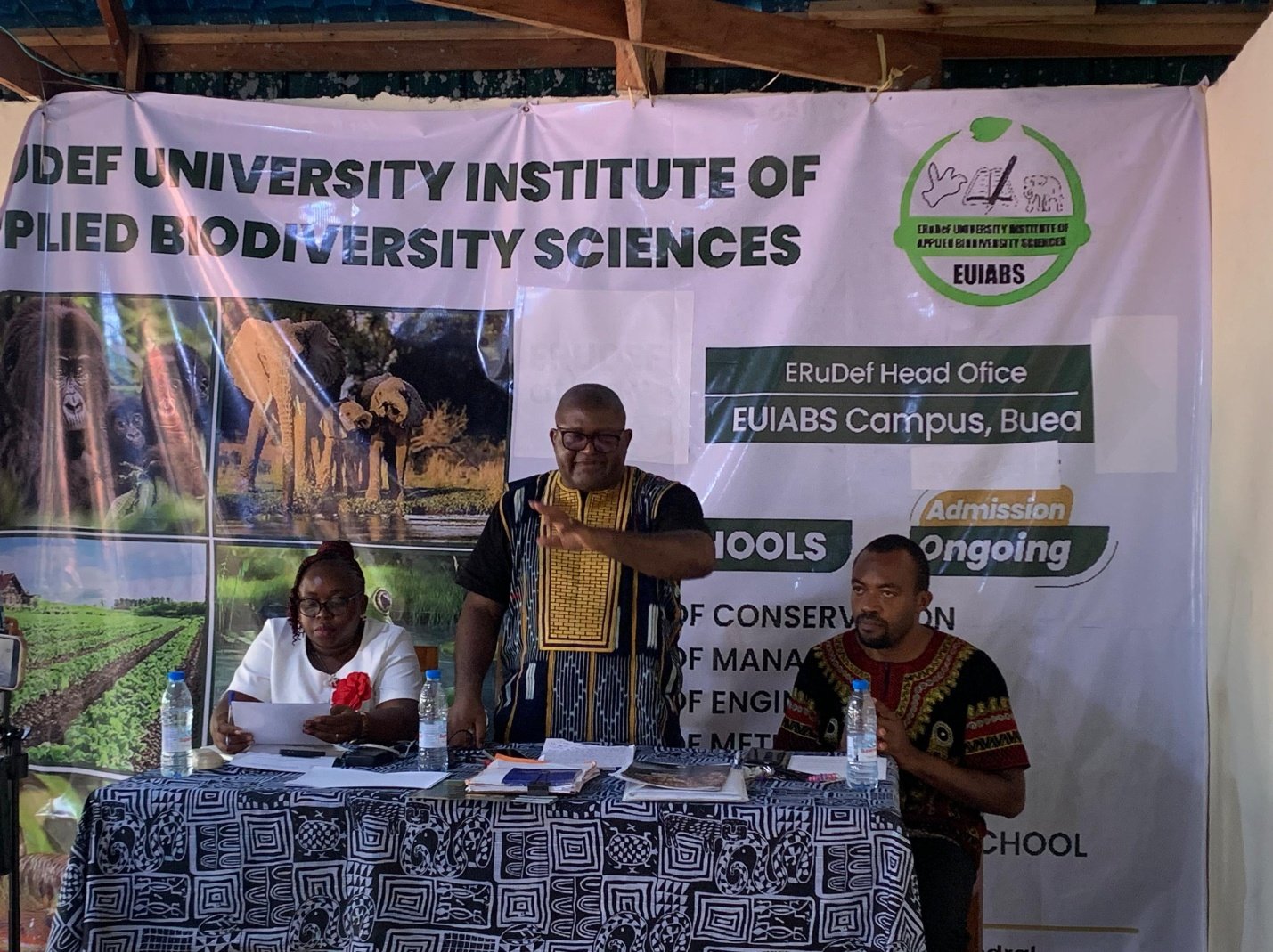
The Cross River Gorilla Alliance was unveiled during a press briefing organised by the Environment and Rural Development Foundation (ERuDeF), bringing together conservation actors, partners and local organisations to forge a unified response to the growing threats facing the species.
The initiative, according to ERuDeF Chief of Finance and Operations, Tenjem Vivian Jingwa, is the outcome of a high-level stakeholder process designed to harmonise conservation efforts across the Nigeria–Cameroon border. Presenting details about the Alliance, she outlined its governance structure, founding vision, strategic pillars and operational roadmap.
She explained that the Alliance brings together a broad coalition of actors, including community-based organisations, conservation institutions and international partners, under a coordinated framework aimed at ensuring long-term survival of the species while improving livelihoods in forest-dependent communities.
At the heart of the initiative are five strategic pillars: strengthening habitat protection and restoration; enhancing scientific research and monitoring; promoting community-based conservation and sustainable livelihoods; advancing policy advocacy and cross-border collaboration; and mobilising sustainable financing for long-term impact.
“These pillars are designed to ensure that conservation is not isolated from development,” Jingwa said, stressing that the Alliance is committed to integrating ecological preservation with socio-economic empowerment.
She added that key commitments include restoring fragmented habitats, improving coordination among stakeholders, scaling up conservation financing and building the capacity of local communities to manage natural resources sustainably. Immediate next steps include the rollout of a joint action plan, expansion of partnerships and the organisation of a global donor conference to mobilise resources.
Speaking at the briefing, ERuDeF President and Chief Executive Officer, Louis Nkembi, underscored the urgency of the initiative, describing it as “a race against time”.
“Since the early 1900s, the population of the Cross River gorilla, found along the Nigeria–Cameroon border, has been in steady decline,” he said. “This species is of immense importance – not only to the conservation community but also to local communities who regard these animals as part of their cultural heritage.”
Nkembi noted that current estimates place the population at about 300 individuals scattered across 12 fragmented habitats. Without intervention, he warned, the species could vanish within 20 to 30 years due to inbreeding caused by isolation.
“The gorillas exist in about 12 fragmented populations. If this fragmentation continues, the species could disappear within the next 20 to 30 years – even without poaching or deforestation,” he said.
The Alliance is targeting a population of at least 1,000 gorillas by 2050. According to Nkembi, a stable population would require a minimum of 600 to 700 individuals, but a higher threshold is needed to guarantee long-term survival.
“Our goal is to stabilise and grow the population. By 2050, we aim to increase the population from the current estimate of about 300 individuals to at least 1,000,” he stated.
Beyond conservation, the initiative places strong emphasis on community engagement. Nkembi stressed that local populations must be central to the solution.
“If communities do not benefit, they cannot sustainably coexist with wildlife,” he said, adding that the Alliance will support the formation of cooperatives and community-based enterprises to attract investment and create alternative livelihoods.
The project will focus on key habitats across both countries, including Takamanda, Tofala, Mone and Wabane Hills in Cameroon, as well as the Cross River National Park, Afi Mountains and Mbe Mountains in Nigeria.
Nkembi further revealed plans to develop ecotourism initiatives once the population stabilises, a move expected to attract significant investment and generate income for local communities.
“We are working towards mobilising global investment into these regions, not through direct cash distribution, but through structured economic and financial support tailored to local needs,” he explained.
The Alliance is also planning a global donor conference to drive funding for community-led development projects, with a focus on sustainable, locally driven solutions.
“This is a race against time,” Nkembi said. “Conservation will only succeed if communities are at the centre of the solution. By combining environmental protection with economic empowerment, we can secure the future of the Cross River gorilla while improving livelihoods.”
The launch marks a significant step towards coordinated, cross-border conservation efforts aimed at preserving one of the world’s rarest great apes while fostering sustainable development in the region.