
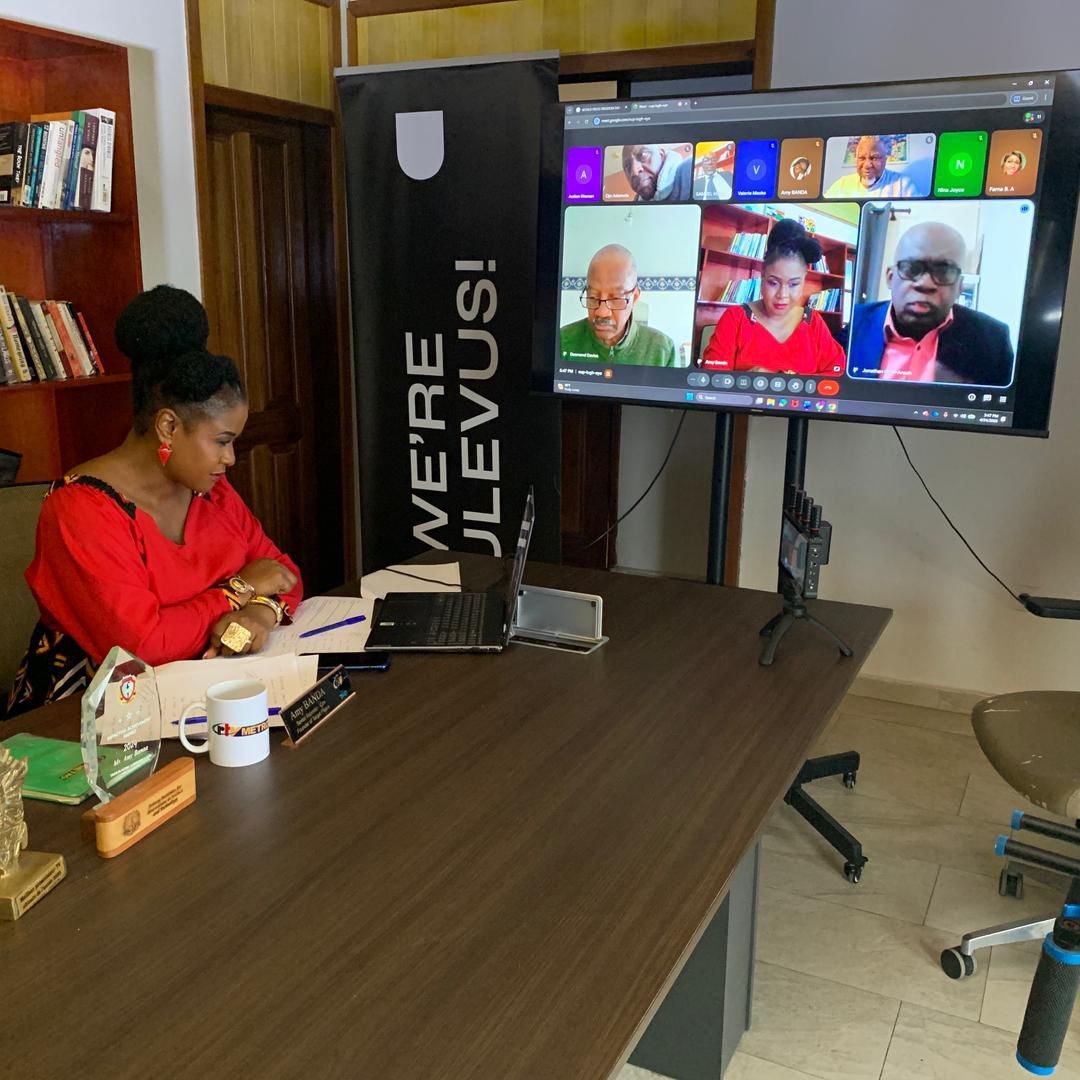
Seasoned journalists from at least six countries have deliberated on how to “Report in the Brave New World: The Impact of Artificial Intelligence on Press Freedom and the Media”.
The discussion took place on Friday, 24 April 2026, during an online event organised by Target Peace to commemorate World Press Freedom Day, nine days ahead of the annual 3 May observance. The global theme for this year is “Shaping a Future of Rights: Freedom of Expression as a Driver for All Other Human Rights.”
Reports indicating that at least 24 journalists have been killed worldwide—including Palestinian photojournalist Ahmed Abu Hussein, who was shot by Israeli troops while covering a protest in Gaza despite wearing a vest clearly marked “PRESS”—sparked intense debate among participants.
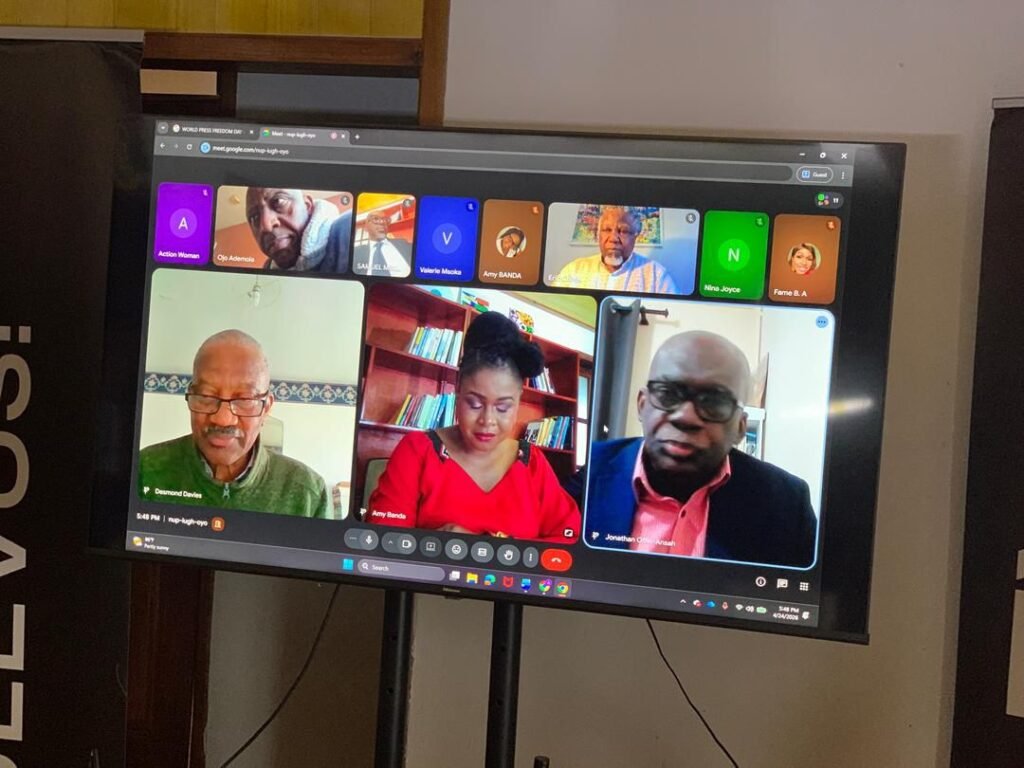
Keynote speaker and Publisher of Africa Briefing, Jonathan Offei Ansah, decried unethical practices that undermine the integrity and credibility of journalism.
Guest lecturer Eric Chinje urged both young and experienced professionals to embrace new technologies, while cautioning against allowing artificial intelligence to take control of journalistic processes.
Contributors including Davies Desmond and Valerie Njoka highlighted the need for improved protective measures for journalists, noting that clearly identifiable press gear should offer greater safety rather than make reporters targets. They also cautioned against normalising discussions around imprisonment, warning that such trends reflect alarming realities.
Ojo Adebajo strongly advocated for the “decolonisation” of artificial intelligence, arguing that Africa must develop and control its own data systems. The proposal received widespread support, with participants stressing that no journalist should face imprisonment or constant threats simply for doing their job.
Tech journalist Fame Bunyui Ayiseh offered practical approaches to practising journalism without fear or favour, while Samuel Enie Mbua expressed concern that media freedom is too often viewed through the narrow lens of administrative control and censorship. He called on journalists to reflect on their individual and collective roles in promoting press freedom, regardless of how small their contributions may seem.
Despite growing threats, including tightening censorship and violence against journalists globally, participants from Cameroon, Ghana, Tanzania, Sierra Leone, Nigeria and the United Kingdom exchanged ideas on how to continue reporting vital stories safely and professionally, even in high-risk environments.
In her remarks, Amy Banda, founder of Target Peace and host of the event, emphasised the central role of truth and integrity in journalism.
“There is nothing as powerful as intellectual honesty and soundness. This is something to be both celebrated and protected on this World Press Freedom Day,” she said.
“There is no peace without human rights. No peace without development. No peace without security. And none of those exist without a free press. Because information is a public good. Because a free press is the backbone of justice. Because no prison can silence the truth.”
She added that a free press is essential for a safe and just world. “Today, we report without fear or favour. Today, we defend the truth and protect the journalist,” she said.
Participants concluded by reaffirming that press freedom remains the cornerstone of democracy, human rights and development, pledging to uphold truth and accountability despite the evolving challenges posed by technology and global insecurity.