
A Response to Dr Eileen’s The Perception that Women are Distractions in the Church
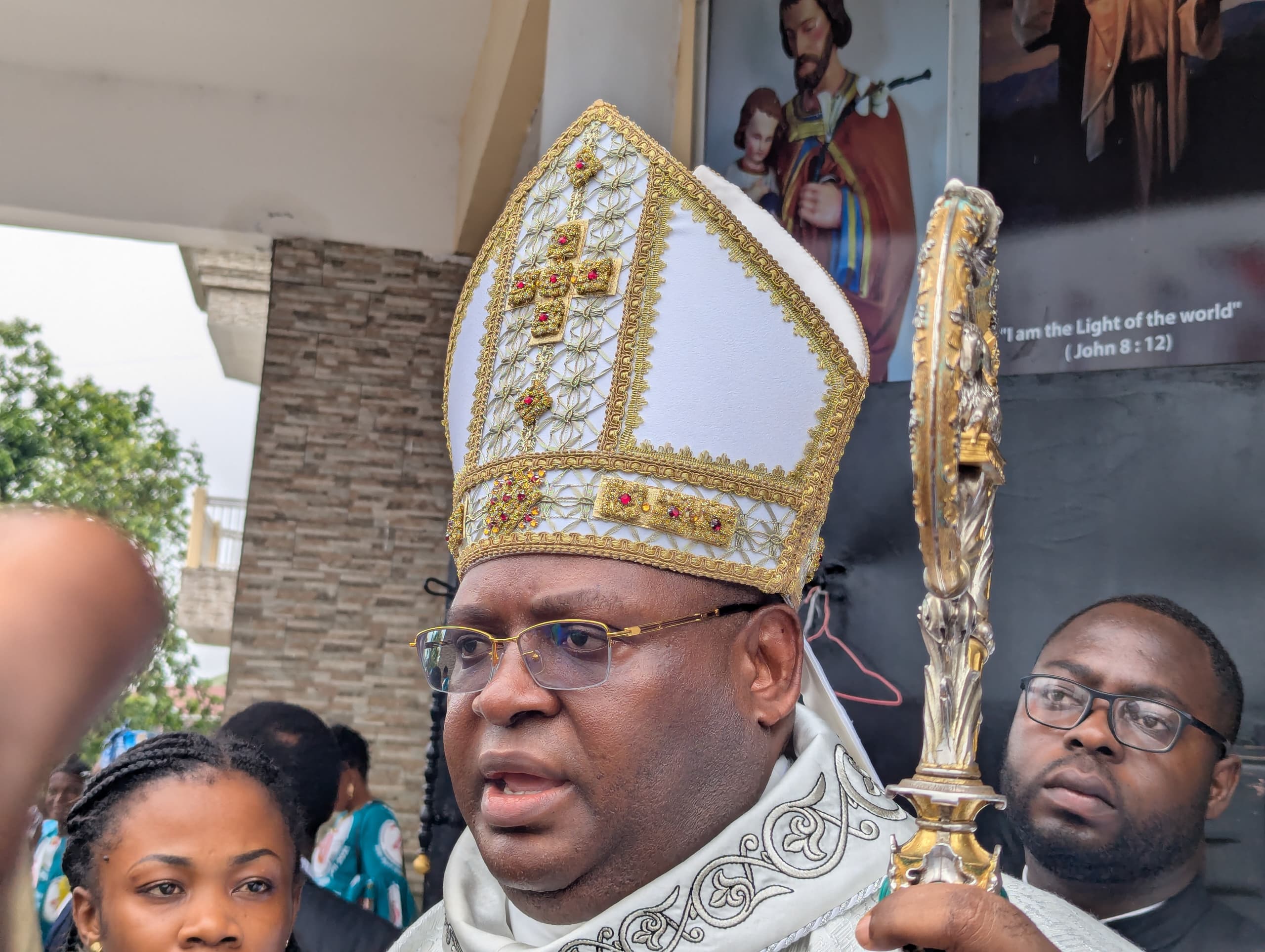
It was during a casual exploration of social media that I encountered an intricately crafted article titled “The Perception that Women are Distractions in the Church.” This compelling piece not only captivated my attention but also provided a scholarly response to the recent pronouncement by the Most Rev. Michael Bibi, Bishop of Buea, who urged women to “stop pursuing priests.” The elegance of the writer’s prose combined with her insightful analysis rendered the article an unputdownable evening read, transporting me momentarily beyond the quotidian realities of life.
Upon completing the piece, I was struck by the deftness with which the author, Dr Eileen Tabuwe Akwo, my respected undergraduate lecturer in Journalism and Mass Communications, articulated her arguments. Dr Eileen’s critical acumen was unmistakable, prompting me to re-evaluate my own perspective after reading her work a second time. Although my initial admiration for her writing remained, my subsequent reflections led me to diverge from her conclusions. In what follows, I shall illustrate the shortcomings of her arguments, articulate the true essence of Bishop Bibi’s message, and underscore the validity of his call for accountability within the Church.
1. Deconstructing Feminist Rhetoric: A Flawed Framework
Dr Eileen’s arguments rest upon conventional ideologies that oversimplify the complex dynamics at play within the Church. By positioning priests as the exclusive wielders of power and framing women as completely devoid of agency, her critique inadvertently diminishes women’s moral autonomy.
The Fallacy of Total Victimhood: This narrative perpetuates the notion that women are incapable of making conscious choices. Such a stance is not only patronising but reductive, relegating women to the role of passive observers in relational dynamics where they are equally invested.
Misdirection in Argumentation: By introducing the serious issue of child sexual abuse, the author draws a false equivalence that distracts from the actual topic at hand. Bishop Bibi’s remarks pertain to consensual adult interactions within the parish, not criminal exploitation; conflating these issues muddles the discourse and sidesteps the pertinent question of adult boundary violations.
Misinterpretation of Pastoral Guidance: When the Bishop advised women to “focus on getting other men,” he did not suggest a reduction of womanhood to the institution of marriage but rather offered pragmatic counsel to redirect romantic pursuits away from consecrated priests. This guidance recognises the importance of honouring the commitments that clergy have made through their vows.
2. The True Import of the Bishop’s Appeal for Accountability
Contrary to the notion of deflecting blame, Bishop Bibi’s address serves as a clarion call for accountability among all stakeholders within the Church community.
The Primacy of the Priest’s Vows: Priests take a solemn vow of celibacy, which places them under direct accountability to their spiritual authority, the Bishop, and church canon. The Bishop’s visible frustration is indicative of a recognition that while internal discipline is essential, it cannot manage external social interactions alone.
Collaborative Role of the Laity: The Church operates as an interconnected ecosystem. For priests to fulfil their demanding roles, the laity must actively respect and support their commitments. This mutual respect is vital for maintaining the integrity of the ecclesiastical community.
The Responsibility of Women: True empowerment involves acknowledging the consequences of one’s actions. Urging women to respect established boundaries is not an act of misogyny; rather, it is a matter of necessary moral accountability. Recognizing the potential pitfalls of romantic pursuits within the clerical sphere is crucial for fostering a respectful environment.
3. Supporting Arguments for the Bishop’s Position
Preservation of Sacramental Function: It is essential to remember that priests are not merely community leaders but fulfil a significant sacramental role that demands spiritual and emotional fortitude. Romantic entanglements threaten their ability to serve impartially, thus undermining the spiritual integrity of the parish community. The Bishop’s exhortation aims to safeguard the right to unfettered sacramental access for all parishioners.
Understanding Social Status and Power Dynamics: While Dr. Eileen’s narrative suggests that priests possess all the power, a more nuanced examination reveals that their social standing may render them vulnerable to those who seek personal or financial gain. Acknowledging this reality provides a more accurate comprehension of the complex motivations at play in clerical relationships.
Protecting the Domestic Church: The Bishop’s admonition safeguards the sanctity of familial structures within his diocese. The erosion of clear boundaries between clergy and laity can lead to scandal, eroded trust, and instability among parishioners. By advocating for respectful boundaries, Bishop Bibi is upholding the spiritual sanctity that is essential for the well-being of families in Cameroon.
From the foregoing, I think the discourse surrounding Bishop Bibi’s remarks should not be confined to a simplistic feminist lens. Instead, it necessitates a broader, more profound examination of accountability, integrity, and the well-being of the Church as a cohesive and supportive community.
The Perception that Women are Distractions in the Church
Your Lordship,
I am an admirer of your passion for the faith and the zeal with which you have accepted the task God has given you to lead the church in Buea. I am a generational Catholic Christian, therefore I write not as an enemy of the Church, but as a daughter of the Church who believes that the Body of Christ in Cameroon must do better by its women. Your recent call, urging women to “stop pursuing priests” and to instead “focus on getting other men,” has circulated widely, and it demands a response rooted in both faith and feminist conscience. I have followed comments on different platforms and reactions by men and women to the message you have shared. I am certain that you are driven by persistent challenges that you have faced in managing the spiritual life of your priests. I am also driven by the need to clarify certain issues emanating from your message.
First, let us be honest about what your words imply. You frame the matter as if the primary threat to priestly celibacy is a “woman”, supposedly chasing after “men” who have made vows to God. But this framing is not only inaccurate, it is a convenient deflection. It shifts the entire burden of moral responsibility onto women while rendering priests as passive victims of female pursuit. This is a direct depiction of the story of Eve tempting Adam, of Delilah betraying Samson, of women cast as the source of male weakness rather than as moral agents. If I may ask, were the children involved in the sexual abuse scandal of our priests guilty for chasing those priests?
The truth is more uncomfortable than your remarks suggest. When relationships develop between priests and women in our dioceses, the power imbalance is profound. The priest is not merely a man; he is a spiritual father, a confessor, a counsellor, a distributor of sacraments, and often a gatekeeper to community resources and social standing. To speak as if women are “pursuing” priests in a vacuum, as if structural power does not exist, is to ignore the reality many of our sisters live. If the Church is serious about protecting priestly celibacy, the focus should be on rigorous formation, genuine accountability, and addressing the clericalism that allows some priests to exploit their authority.
There is a second wound your words inflict, and it cuts deep. You told women to “focus on getting other men.” With profound respect, His Lordship, this reduces the daughters of your diocese to men-seekers first and human beings second. It suggests that a woman’s primary purpose is to “get” a man, and that if she is not oriented toward this goal, she is somehow out of place. What of the widows, the single mothers, the consecrated virgins, the women who have chosen careers, the women who have survived abuse and are healing, the women who simply do not define themselves by marital status? Do they not belong fully in the Church? Must every pastoral address to women circle back to men?
Cameroonian women are already among the most resilient on this continent. We farm, we trade, we educate, we heal, we lead families, we sustain parishes, we keep the Church alive in villages and cities alike. We do not need to be told whom to “get.” We need to be seen as full members of the People of God, with dignity that does not depend on our relationship to a man, priest or otherwise.
You are rightly concerned about the distractions from the priestly mission, and you are rightly angry to point fingers at some women who indeed find pleasure in the company of priests, but in my estimation, your key message should not have been about women but also about your priests, who pursue people’s wives, daughters and sisters. Perhaps the conversation we need is a different one. Perhaps we need to talk about the women who are harassed by clergy and have nowhere to turn. Perhaps we need to talk about the structures that isolate priests from healthy community, or about the loneliness that Church teaching itself can create when human intimacy is flattened into a threat rather than understood as a complex reality. These are hard conversations. They require looking inward, not outward at the “women in church.”
Your Lordship, let me repeat that I am a strong supporter of the vision for the church that you uphold and the work you do. I love the Church, and that is precisely why I refuse to let it settle for easy patriarchal answers. The women of Buea, and of Cameroon, deserve a theology that respects our intelligence, our autonomy, and our sacred dignity. We are not distractions. We are not pursuers. We are the Church.