
By Boris-Kaloff Batata
Waves crash relentlessly upon Kribi’s shores, washing away the white sand and eroding livelihoods in Cameroon’s port city, where experts warn of imminent submersion without urgent action.
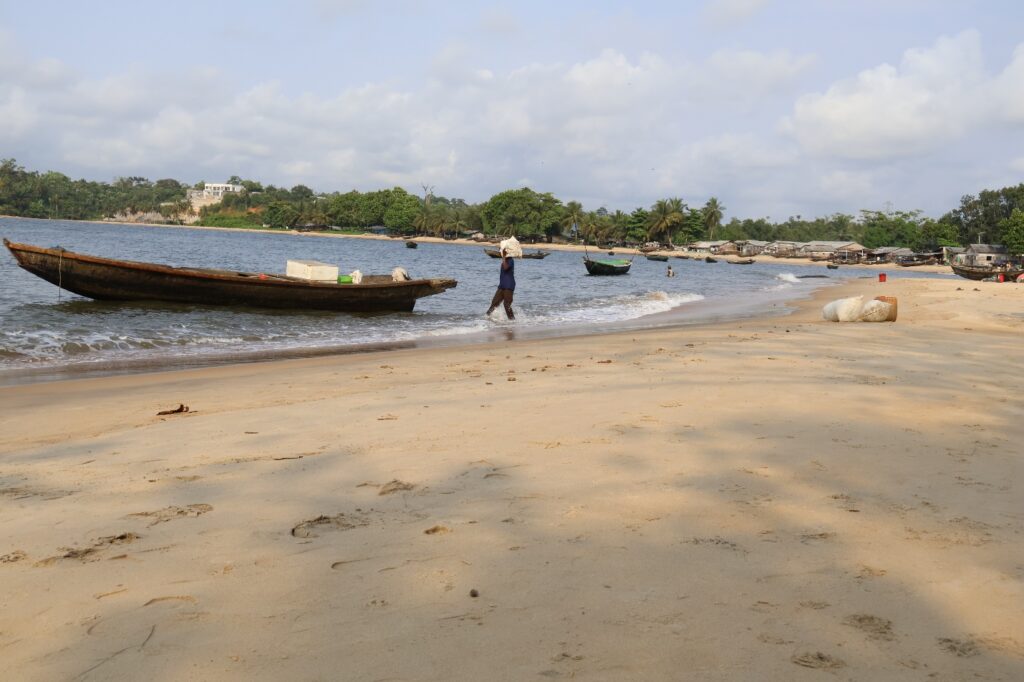
“Where we are standing right now used to be people’s houses,” recounts Ahidjo, a fisherman at Londji Beach in Kribi, gesturing towards the sea. “Where you see those canoes over there, there used to be homes. But as the climate changed, the sea broke all the houses. Some people moved further inland, others went to the city.”
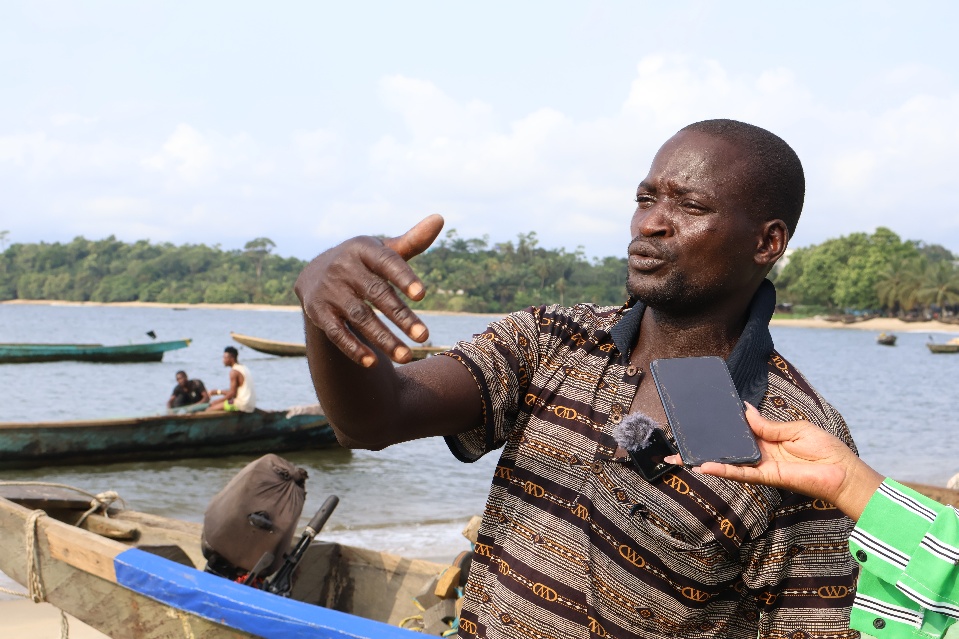
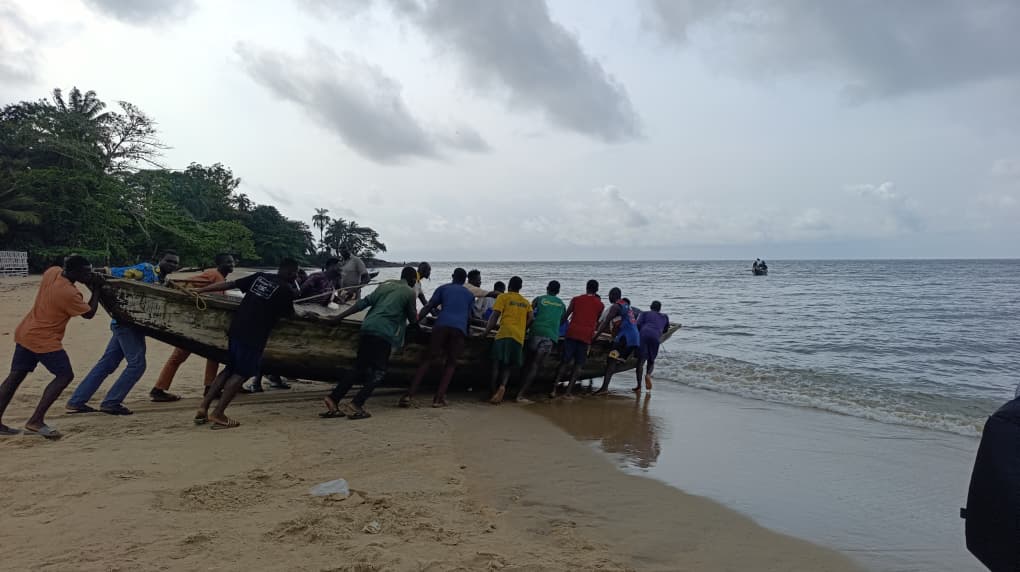
It is a busy day at Londji Beach. Vendors, locally known as ‘buyam-sellam’, haggle for the fresh catch, while fishermen ready their boats to return to sea. Among them is Marie Lobango, over 30, who has lived in Londji all her life. Her parents were fishers, and she speaks of how fishing has changed along the coast, blaming coastal erosion and human activities like industrial noise from SNH gas plants, the deep-water port, and population growth.
“The fish trade sustains families, but fish are becoming scarce and more expensive,” Marie explains. “Population growth brings more migrants relying on fishing, while industrial noise from the gas plants and port drives the fish farther offshore. This means more fuel is needed to reach them, which raises the price.” She also laments how erosion advances the water towards homes, destroying protective mangroves and forests despite replanting efforts. “This erosion, made worse when people clear land for housing, makes us fear the village could be submerged, threatening everything our families have inherited.”
Other reports, such as those from Camepi, also point to industrialisation, urbanisation, and the construction of the deep-sea port as increasing environmental pressures, including coastal erosion, flooding, deforestation, and marine pollution. Mongabay reported that the 26,000-hectare Kribi Port Authority site was once coastal forest and mangrove swamp, and its development has led to significant deforestation, exacerbating a growing humanitarian situation.
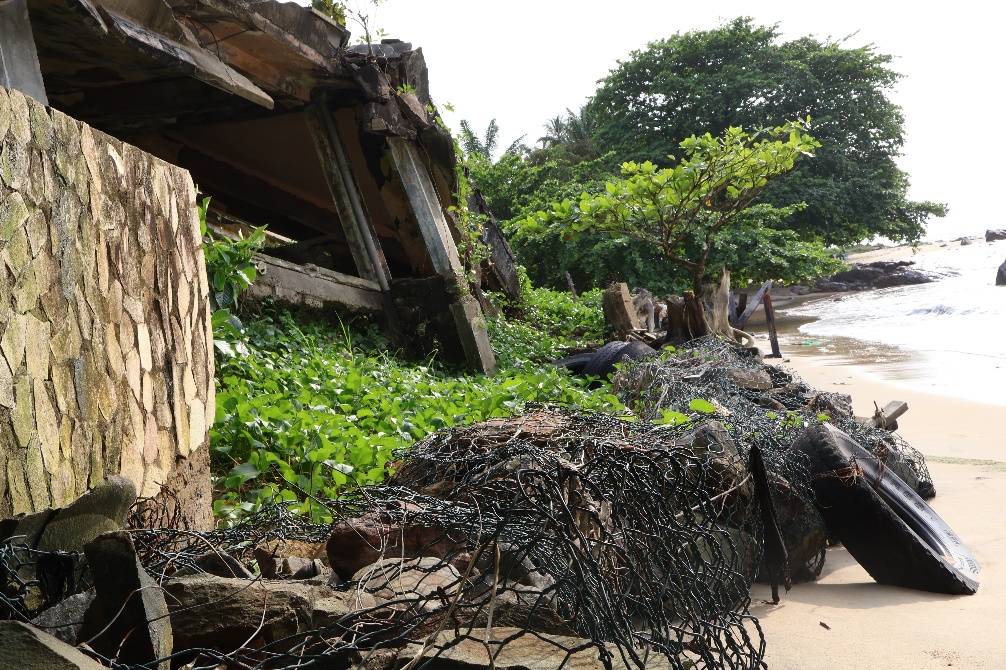
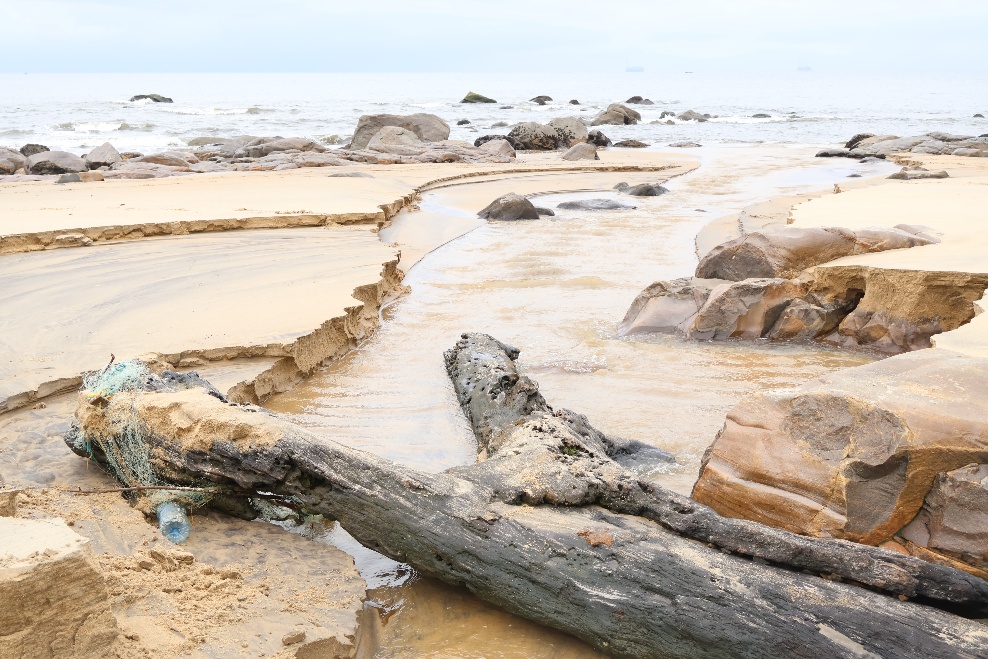
Approximately 20km from Londji lies Ngoye Beach in central Kribi. Bustling with tourists drawn by the ocean breeze, the coastline features an abandoned structure—the remains of a once-popular restaurant claimed by coastal erosion in 2017. “That restaurant was destroyed by coastal erosion,” notes oceanographer Dr. Abessolo Ondoa Grégoire, using it as a stark example of the environmental crisis facing Kribi.
Environmental Problems Facing Kribi
The port city of Kribi, home to over 90,000 inhabitants in the Ocean Division of Cameroon’s South Region, stretches along the Gulf of Guinea at the mouth of the Kienké and Lobé rivers. It faces a twin challenge, as explained by Dr. Grégoire, a senior lecturer specialising in ocean, atmosphere, and climate.
“The first issue is coastal erosion,” he says. “This happens when more sand leaves the coast than arrives. Here in Kribi, that difference is significant. The second challenge occurs during extreme weather events, when the water level rises dramatically.” He forecasts grave consequences, predicting the main coastal road will vanish within a decade, with casualties occurring yearly. “This road will disappear. In ten years, it will be gone, and every year we have several deaths here already.”
Local Solutions to Kribi’s Coastal Erosion
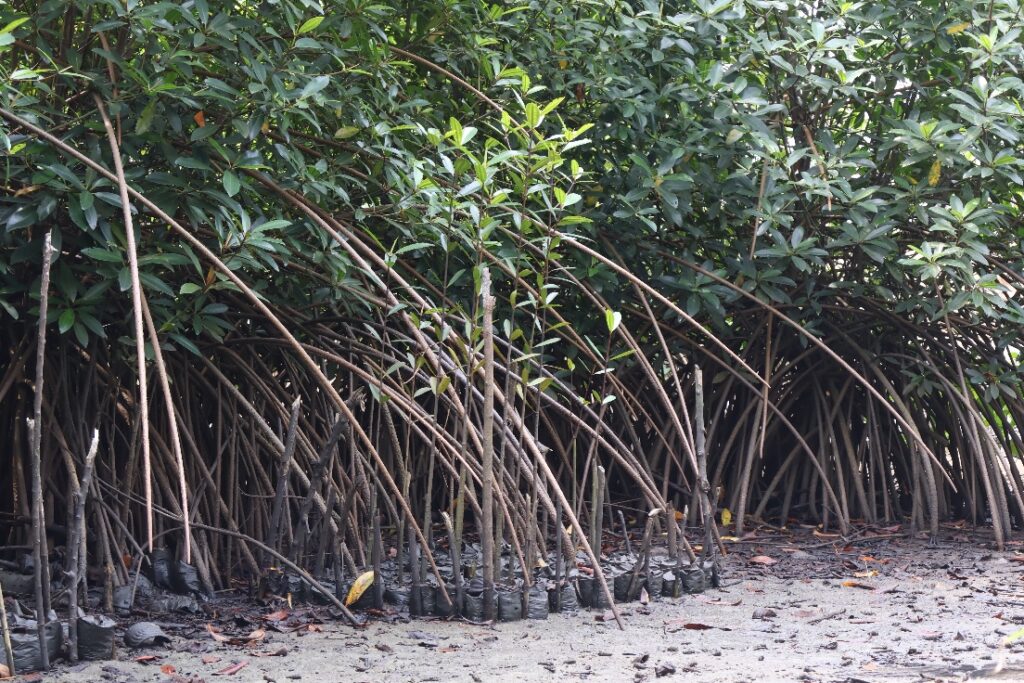
The tangible effects of climate change are pressing, but local efforts to rescue the city are underway. One key initiative is mangrove reforestation led by researcher Dieka Emmanuel, an expert in aquatic forests with a speciality in mangroves.
During a visit to the Institute of Agricultural Research for Development, Emmanuel pointed to a section where he has been planting mangroves for nearly a decade. Young saplings thrive while others are nurtured for future planting. “I want to cover the whole area,” he states, aiming to restore the lost ecosystem. He currently works on a two-hectare plot.
Environmental expert Manzo Nzumao highlights the resilience of mangroves against rising seas and floods: “Since these shrubs are highly resistant, they can withstand high tides… so mangroves can help hold back the water when the tides are high.”
Other initiatives, like that of the Global Environment Protective Association, have sought to regenerate mangroves in the Ocean Division. However, as reported by Data Cameroon, this effort faced setbacks, with only about 1,300 hectares surviving out of 3,800 planted.
Mengue Guy of the African Marine Conservation Organisation (AMCO), who leads marine inhabitant research, outlines the challenges facing conservation in the region. “We face several challenges,” he says. “The first is simply getting people to listen and participate on the ground. Marine conservation isn’t yet widely understood or accepted in Cameroon.” He adds that local stakeholders often misinterpret conservation messages, hindering action.
With the increasing frequency of climate-triggered disasters, the time for a collective effort to save Kribi and other coastal cities from submersion is now.