
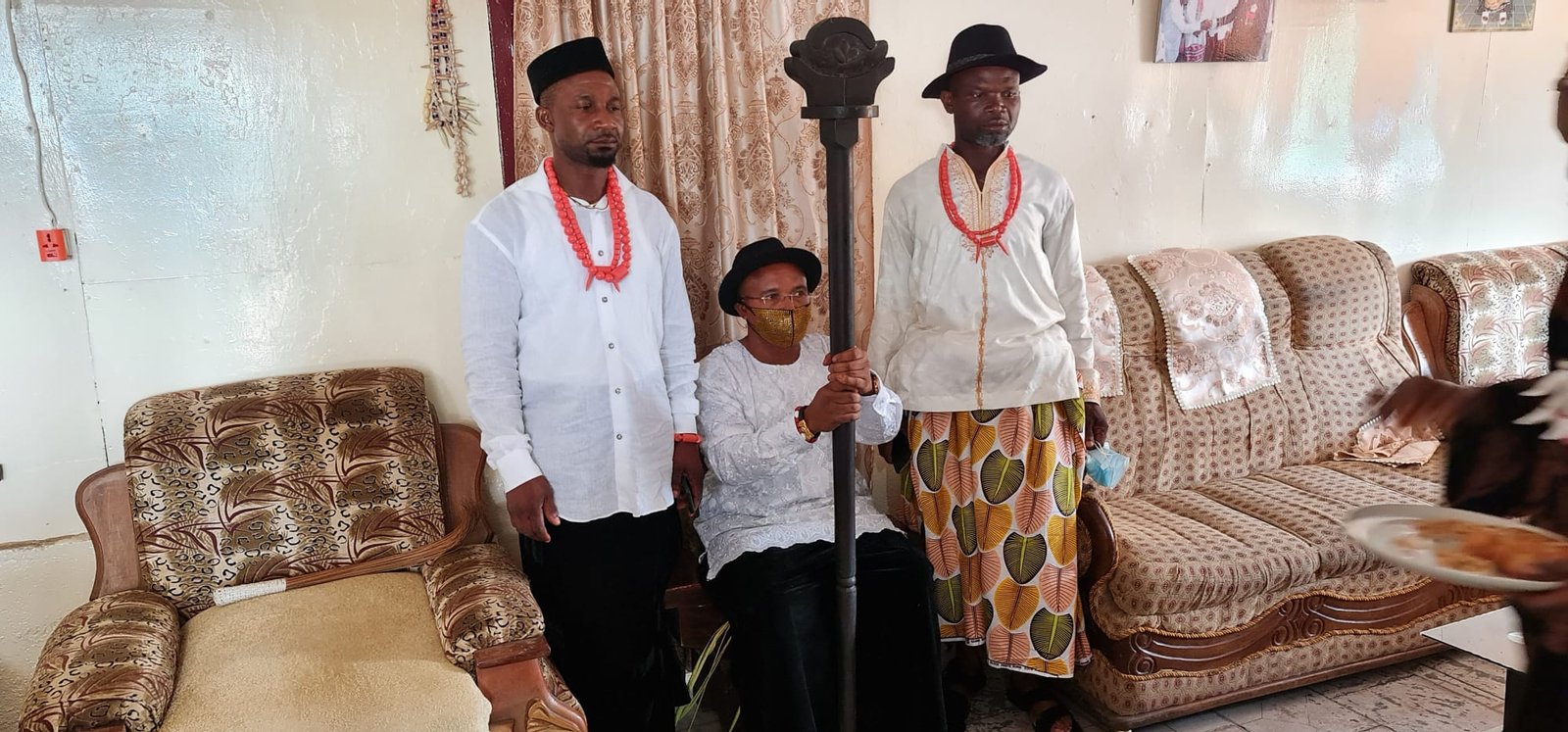
The succession dispute rocking Likoko-Membea village in the heart of Buea, has taken a new turn, with the former chief, Bernard Fende Ngeke, coming under criticism from sections of the royal family and kingmakers who accuse him of twice attempting to abdicate in favour of his sons before turning against the administrative process he initiated, when neither bid succeeded.
Sources familiar with the matter say the former chief is now blaming administrative authorities for failing to support his preferred succession plan, a claim that has further deepened divisions within the royal family as well as the community. The Chief is now accused of contesting a vacancy process that he had previously sought to trigger in efforts to secure the throne for his children, against the established norms and procedure.
According to sources familiar with the matter, tensions have been mounting within the community over the future of the third-class chiefdom after the former chief, Bernard Fende Ngeke, reportedly made two separate attempts in recent years to facilitate succession by his sons.
Documents show the first attempt occurred in 2021 when a move was allegedly made to designate the Chief’s eldest son as successor. The initiative reportedly failed to gain the broad support required from traditional stakeholders.
A second attempt is said to have followed in late 2025 when the former chief resigned again, this time on health grounds, a move that critics claim was intended to pave the way for another son to assume the throne. However, the emergence of other contenders, especially Monangai Mani from the royal lineage, is understood to have complicated the process for the Chief and his sons, prompting him to turn against the process he started. It is understood that the Chief did not foresee a scenario where another member of the royal family would show interest in ascending the throne.
The dispute escalated after administrative authorities declared the chiefdom vacant and initiated consultations aimed at identifying a new chief in accordance with established procedures.
Interested parties, including the royal family and locals, have, on their part, called on administrators in Buea, Fako and the government in general that the process initiated by the Chief, who resigned twice, be maintained, and that fresh consultative talks should be organised to ensure a transparent selection process.
They contend that it is contradictory for those who previously advocated for the vacancy to now oppose it after other candidates emerged.
Sources close to the discussions say one of the leading contenders is Monangai Mani, who is presented by supporters as a descendant of the recognised royal lineage and a candidate enjoying significant backing within the community.
The petitioners have also called for investigations into several issues surrounding the succession process and the management of community affairs. According to sources familiar with the petition, they are seeking inquiries into allegations of unauthorised land transactions involving community property, claims of usurpation of traditional authority, and accusations that certain official documents purportedly issued in the name of the chief may have been forged or improperly signed. The petitioners further allege that following the former chief’s resignation on health grounds, his son exercised authority over the chiefdom for several months without the endorsement of the recognised kingmakers, during which disputed land deals were allegedly carried out.
They contend that these actions formed part of a broader effort to influence the succession process and secure control of the throne. Concerned and interested stakeholders are urging administrative, judicial and anti-corruption authorities to thoroughly examine the allegations and ensure that any eventual designation of a new chief is conducted transparently and in accordance with both customary practices and state regulations.
As tensions persist, many residents are calling for a transparent process capable of preserving peace and ensuring that the eventual selection of a new chief reflects both tradition and community consensus. They are calling for fresh consultative talks to be convened as soon as possible to designate a new chief in a public and transparent manner, following the right procedure.