
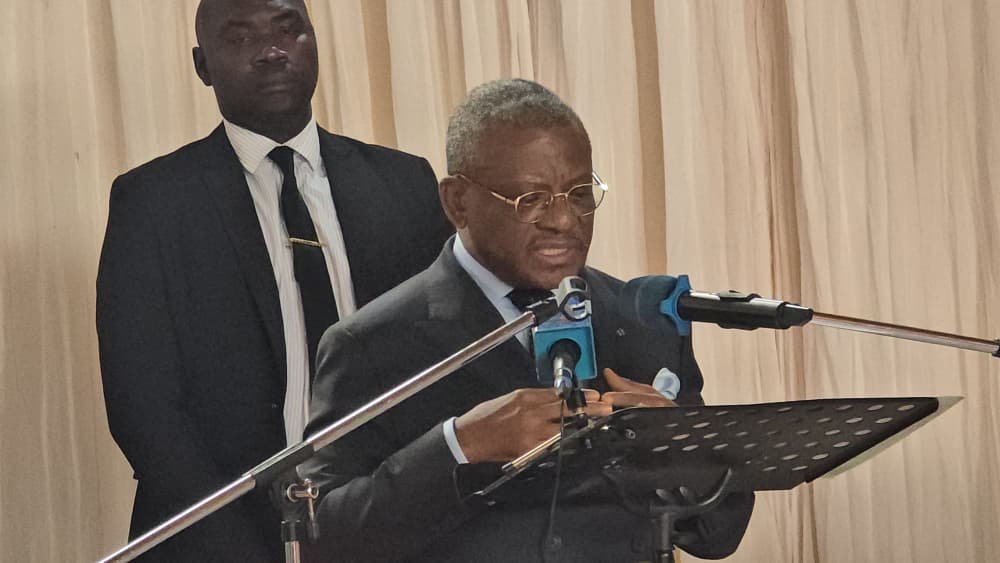
The Prime Minister, Head of Government, Chief Dr Joseph Dion Ngute, has taken the government’s community dialogue initiative to the North West Region, urging residents to work collectively towards ending the decade-long Anglophone conflict, while stakeholders have called for improved public services, job opportunities and lasting peace.
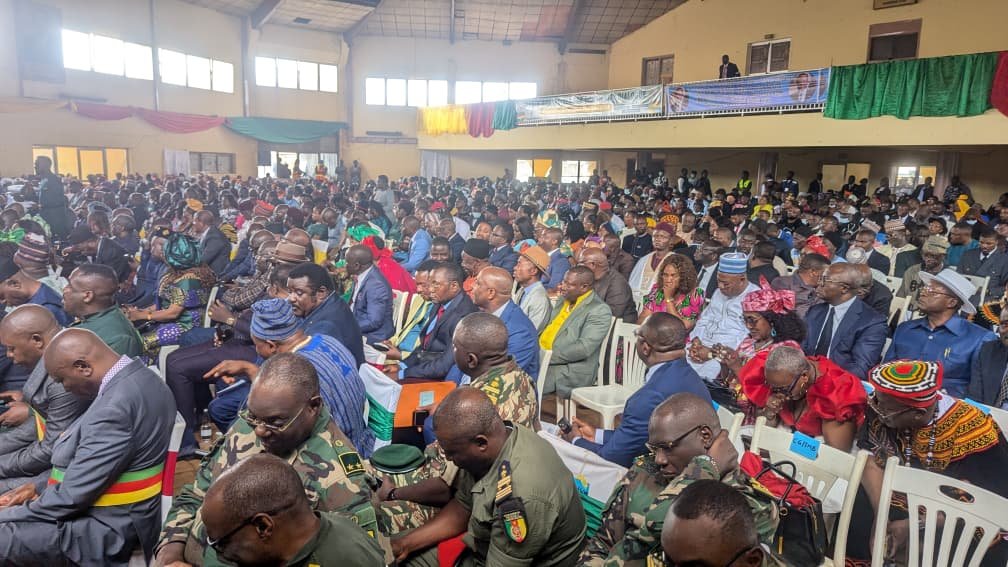
Speaking at the Bamenda Congress Hall on October 15, 2026, during a regional consultation involving traditional rulers, religious leaders, civil society actors and youth representatives, Dion Ngute said communities must take greater responsibility for restoring peace by reaching out to separatist fighters and encouraging them to lay down their arms.
The initiative seeks to translate the recommendations of the 2019 Major National Dialogue into action at the grassroots, in line with President Paul Biya’s vision of locally driven reconciliation.
“The military has stabilised the region, but the military cannot get into every hole to bring out the separatists. So our ultimate responsibility to end these miseries rests on our shoulders. No other person will do it for us,” the Prime Minister said.
Describing the conflict as a source of destruction, killings and suffering, he appealed to families and community leaders to engage those still involved in the fighting.
“The people fighting are our children, our relatives, our junior brothers and sisters,” he said, insisting that the crisis must come to an end.
Stakeholders Seek Jobs, Better Services
Beyond the appeal for peace, participants used the dialogue to highlight socioeconomic challenges and governance concerns they believe must be addressed to make reconciliation sustainable.
Representatives from the region’s seven divisions raised issues ranging from unemployment and political representation to the reintegration of former fighters and the need for stronger community engagement.
Mekom Samuel, President of the Cameroon National Youth Council for the North West, identified youth unemployment, illicit substance use and delays in the Disarmament, Demobilisation and Reintegration (DDR) programme as major concerns.
“Over 99 per cent of the youth in this region are peaceful, but they are jobless,” he said, warning that idleness and economic hardship could leave young people vulnerable to recruitment into armed groups.
He called for an enabling environment that would give young people better economic prospects, alongside faster processing at DDR centres and more immediate support for former fighters who voluntarily surrender their weapons.
According to Mekom, visible assistance for those who abandon armed groups could encourage others to follow suit. He also urged authorities and community leaders to take dialogue directly to young people, including those still in the bushes, rather than rely on intermediaries.
Speaking for traditional rulers in Menchum Division, Fon Mbuh II of Weh called for greater political inclusion, arguing that the division had not produced a minister or director-general since reunification.
He said traditional rulers were prepared to lead local consultations with young people and encourage those involved in the conflict to return home.
Reconstruction Must Go Beyond Infrastructure
North West Governor Adolphe Lele Lafrique outlined ongoing government development interventions, while acknowledging the administrative and technical challenges affecting project implementation.
Under the Presidential Plan for Reconstruction and Development (PPRD), 77 projects were earmarked for the region during the 2025/2026 period. Of these, 25 had been completed, while others were ongoing, with the overall physical execution rate standing at 66 per cent.
The governor commended cooperation between communities, traditional authorities, religious leaders and security forces, urging residents to help security officials identify potential threats.
He called on the population to embrace the principle of “see something, say something” as part of collective efforts to restore stability.
Minister Paul Tassong, President of the PPRD Steering Committee, stressed that reconstruction must be accompanied by efforts to rebuild trust and social cohesion.
“Building infrastructure and amenities will not solve the problems on their own,” he said.
Tassong disclosed that the programme had constructed 18 multipurpose halls for women and girls and three traditional palaces to support community life. He added that verification was underway on more than 20,000 housing reconstruction requests to ensure assistance reached intended beneficiaries.
The dialogue is expected to move from regional consultations to grassroots engagement. However, participants’ calls for jobs, improved public services and meaningful reintegration underline the broader challenges facing efforts to secure lasting peace in the North West.