
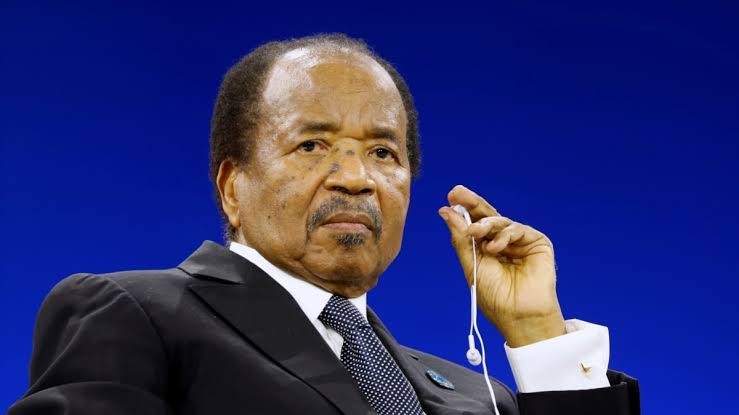
For decades, the office of the President of the Republic has symbolised the highest seat of authority in Cameroon. Yet President Paul Biya’s latest prolonged stay abroad has raised fresh concerns: Has the Cameroonian presidency effectively become a remote job that can be performed from anywhere in the world?
The question is no longer confined to opposition politicians or government critics. It has spread to market squares, taxi parks, university campuses, social media platforms and even family dinner tables, where Cameroonians are debating whether the country’s highest office can continue to function effectively while its occupant spends extended periods outside national territory.
Unlike ordinary professions that shifted online during the COVID-19 pandemic, the presidency has traditionally been viewed as an office that requires visible leadership, direct engagement with citizens and regular interaction with state institutions. However, President Biya’s repeated and lengthy stays abroad, particularly in Switzerland, have prompted renewed discussion about whether Biya’s regime has effectively transformed the exercise of executive power into a form of remote governance. He recently signed some decrees from abroad, prompting the Minister of Labour and Social Security Gregoire Owona, to say the President is still working after all.
The debate has gained momentum amid the President’s latest absence, which has once again unleashed a torrent of rumours, speculation and conspiracy theories.
Across social media platforms, WhatsApp groups and online blogs, claims have proliferated alleging that the 93-year-old President is seriously ill, admitted to hospital, undergoing surgery or receiving specialised medical treatment in Switzerland. Others have gone even further, claiming without presenting evidence that he has become incapable of governing or is quietly preparing to relinquish power.
No official evidence has been presented to substantiate these claims, and the Presidency has not announced that the Head of State is hospitalised or medically incapacitated. Nevertheless, the limited flow of official information regarding the President’s prolonged stay abroad has allowed speculation to flourish, with each day of silence giving rise to fresh narratives and competing theories.
As rumours multiply, government ministers, senior officials of the Cameroon People’s Democratic Movement (CPDM) and some of the President’s most ardent supporters have mounted an increasingly vigorous public defence of his absence.
Rather than focusing on the speculation itself, many have sought to reframe the debate by insisting that President Biya’s location is legally and constitutionally irrelevant. According to them, what matters is that the machinery of government continues to function and that presidential decisions continue to be issued.
Several ministers and CPDM officials have argued that the President has every right to work from abroad. They contend that advances in technology enable the Head of State to receive reports, chair consultations, sign decrees and direct government business without being physically present in Yaoundé.
Others have gone further, describing criticism of the President’s prolonged stays abroad as politically motivated, insisting that no constitutional provision requires the Head of State to remain permanently within Cameroon’s borders.
To supporters of the ruling party, if government institutions continue functioning and constitutional processes remain uninterrupted, the President’s physical location should not be a matter of public concern.
Yet that position has done little to silence critics.
For many Cameroonians, the debate extends beyond legality to questions of leadership, accountability and symbolism. They argue that the presidency is not merely an administrative office but also a national institution whose holder is expected to provide visible leadership, particularly during periods marked by economic hardship, insecurity and political uncertainty.
In today’s digital age, rumours often travel faster than official statements. Where governments provide limited information, speculation frequently fills the gap. The longer uncertainty persists, the more difficult it becomes to distinguish verified facts from deliberate misinformation.
That pattern has become increasingly evident in Cameroon, where every prolonged presidential absence is accompanied by a flood of unverified reports, anonymous social media posts and conflicting narratives, many of which quickly gain traction despite lacking credible evidence.
The current debate raises broader questions about how executive power is exercised, how governments communicate with citizens, and what expectations Cameroonians should have of the country’s highest public office.