
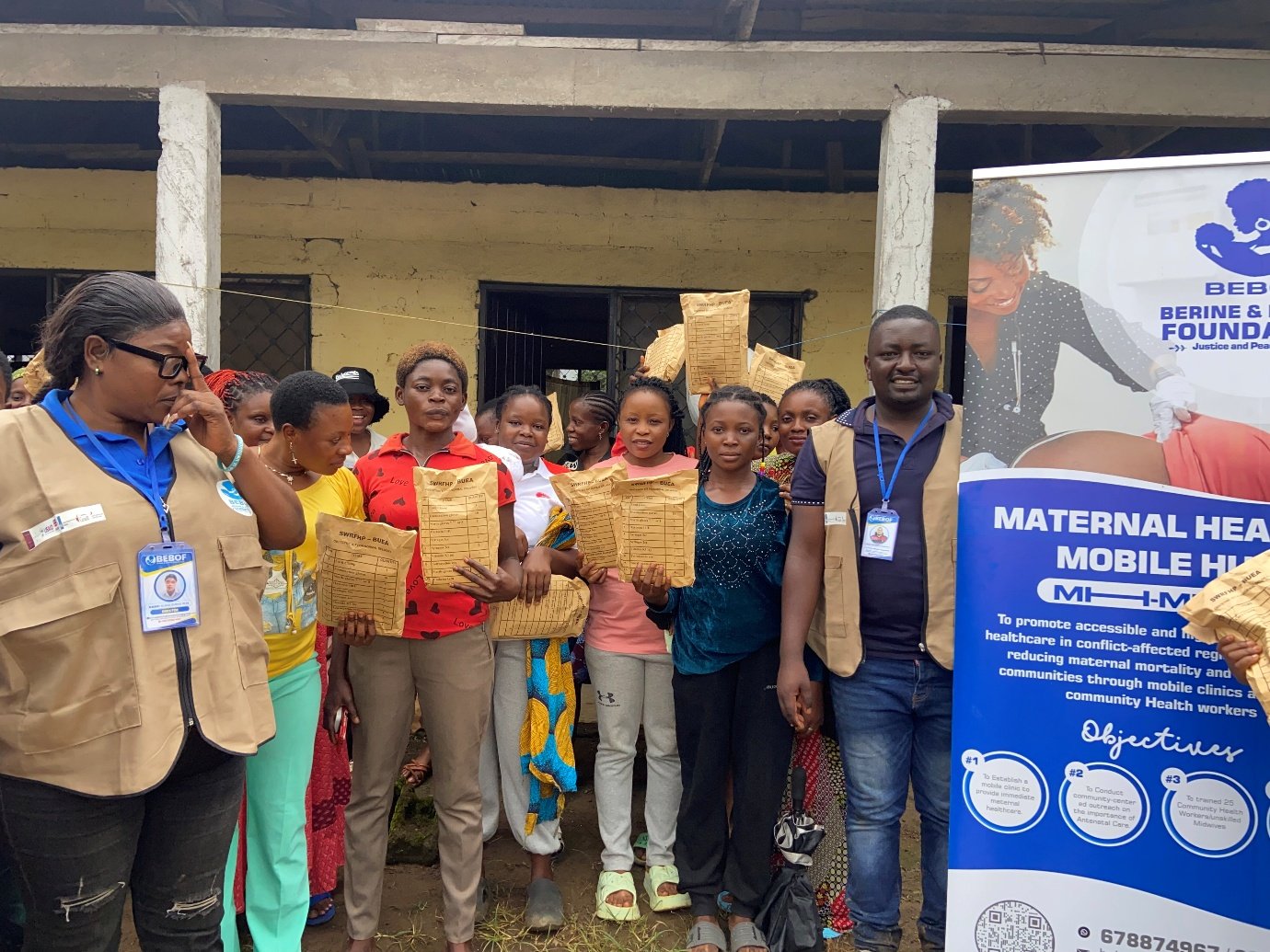
Cameroonian humanitarian and human rights advocate, Achileus Tardzenyuy, has been leading efforts to provide maternal healthcare to hundreds of pregnant women living in some conflict-affected and hard-to-reach communities in the Southwest Region.
Through the Maternal Health Mobile Hub, MH-MH, Tardzenyuy and his team have taken maternal health services closer to women in communities where insecurity, poor roads, long distances and financial difficulties have continued to affect access to healthcare.
Serving as Project Lead of the Maternal Health Empowerment initiative in one of the most dangerous conflict Zone of the anglophone crisis may have been a daunting task for Achileus Tardzenyuy. The initiative was supported by Creating Hope in Conflict: A humanitarian Grand Challenge
The intervention was conceived against the backdrop of the armed conflict that has affected Cameroon’s Northwest and Southwest Regions since 2016 and disrupted access to health facilities and other essential services in several rural communities.
In parts of the Konye Health District where the intervention was implemented, some pregnant women reportedly travelled about 80 kilometres in search of maternal healthcare.
For women approaching childbirth, the distance was compounded by deteriorating roads, transportation costs, insecurity and restrictions on movement.
Faced with this situation, Tardzenyuy led a team that adopted a mobile and community-based approach intended to ensure that pregnancy and childbirth did not become a death sentence simply because a woman lived far from a functioning health facility.
The Maternal Health Mobile Hub combined mobile health outreach with antenatal care support, community mobilisation, referral of pregnant women, safe delivery support and the provision of basic maternal health supplies.
The initiative also worked with Community Health Workers, CHWs, traditional birth attendants, health facilities, community leaders and public health authorities to identify pregnant women and link them to appropriate healthcare.
Tardzenyuy’s work was particularly focused on ensuring continuity of maternal healthcare despite the difficult security environment.
When insecurity or poor roads made direct mobile outreach difficult, the team adjusted its approach rather than abandoning the affected communities.
Community Health Workers intensified door-to-door visits, while referral networks linking communities to existing health facilities were strengthened.
The initiative also introduced antenatal care and delivery vouchers which enabled pregnant women to obtain care from participating health facilities when security conditions or road accessibility made it difficult for the mobile team to reach them directly.
The approach meant that the project was not restricted to the physical movement of a mobile clinic but developed into a wider community-based network through which women could be identified, followed up and supported throughout pregnancy.
Over 450 deliveries were supported across health facilities in the Konye Health District during the implementation period.
The supported deliveries included women who were directly reached, referred or assisted through the Mobile Hub and its network of community-based actors.
More than 2500 antenatal care visits were also recorded across the supported health facilities.
Among the facilities which received women through the intervention were the Mbakwa Supe Integrated Health Centre, Matondo II Integrated Health Centre, Konye Integrated Health Centre, Konye District Hospital, Matoh Butu Integrated Health Centre and other facilities serving remote communities.
The initiative also placed emphasis on changing a practice which remained common in several communities – home delivery without skilled medical assistance.
Rather than treating traditional birth attendants as opponents of the formal healthcare system, Tardzenyuy and his team brought them into the intervention and strengthened their capacity to identify pregnancy danger signs and refer women to health facilities.
32 community Health workers were trained. Those trained were expected to recognise complications, encourage antenatal care attendance and help pregnant women access skilled delivery services. The strategy also strengthened the role of Community Health Workers who became important links between households and health facilities.
Through household visits and community mobilisation, they identified pregnant women, provided health information and encouraged them to attend antenatal consultations and deliver in health facilities.
The intervention equally distributed birthing kits and supported access to misoprostol, which is used in preventing and managing postpartum haemorrhage, a serious complication associated with childbirth.
For Tardzenyuy, however, providing supplies was only one part of the response.
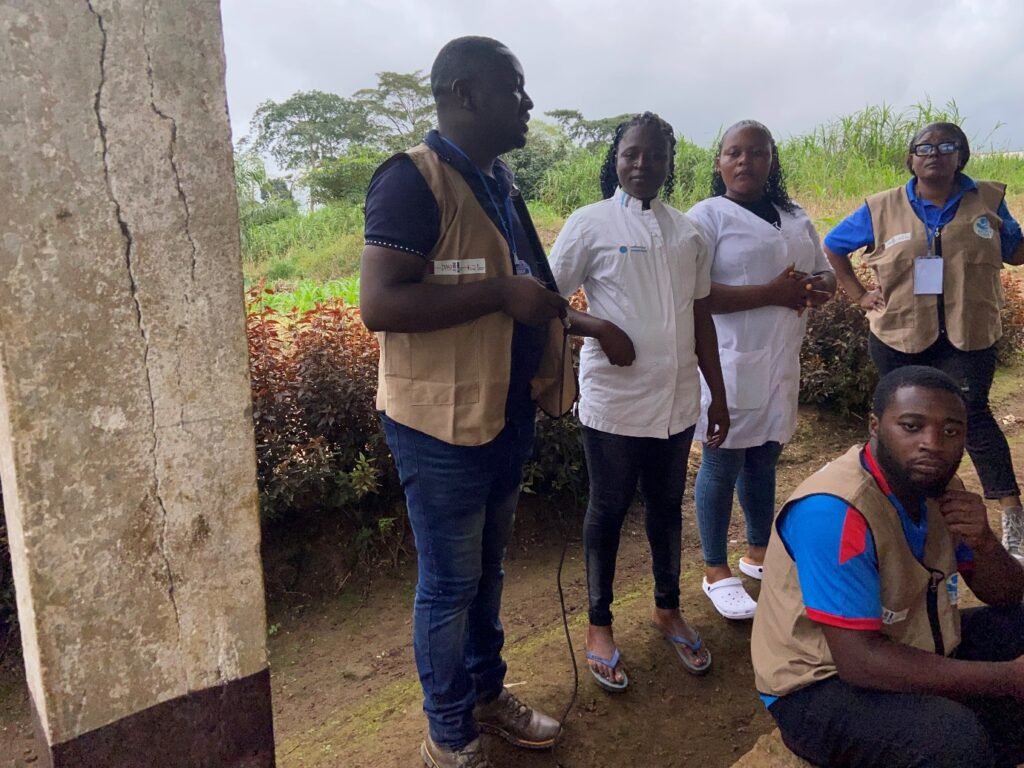
His approach involves creating a system around pregnant women so that those living in communities affected by conflict could still obtain information, referrals, financial support and access to professional care.
One beneficiary from Konye said she learned during her pregnancy that women were being supported to receive maternal healthcare without paying for the services.
She subsequently began visiting the health facility and later delivered safely.
Another woman who had earlier delivered at home reportedly developed a life-threatening complication after part of her placenta was retained following the delivery.
She was rushed to a health facility where she received treatment under the initiative.
The experiences of such women illustrate the conditions which motivated Tardzenyuy’s drive to intervene in communities where poverty and conflict had made home delivery an option for some women who could not easily reach or pay for professional healthcare.
Beyond direct health services, the initiative sought to rebuild confidence between communities and the formal healthcare system.
Women who had previously stayed away from health facilities increasingly sought antenatal care and facility-based delivery, while traditional birth attendants became more involved in referring women instead of conducting complicated deliveries at home.
The work was carried out despite insecurity which periodically affected access to communities and the movement of health personnel.
Achileus had to continually adapt routes, schedules and methods of reaching pregnant women depending on prevailing security and road conditions.
For Tardzenyuy, this meant leading a humanitarian health intervention in an environment where planning could change quickly and where reaching the women who needed assistance required close collaboration with people living within the communities themselves.
The work has since demonstrated the possibilities of using mobile and community-linked healthcare approaches to maintain access to essential maternal services in areas affected by insecurity.
It has also drawn attention to a less visible consequence of Cameroon’s prolonged Anglophone conflict.
Beyond displacement, destruction and interruptions in economic activity, pregnant women continue to face particular risks when violence separates communities from functioning health facilities.
A blocked road, unavailable vehicle or inability to raise transportation money can have serious consequences when a woman develops an obstetric emergency.
Through the Maternal Health Mobile Hub, Tardzenyuy and his collaborators sought to reduce that distance between vulnerable women and healthcare.
His work placed him and his team directly within communities where the humanitarian consequences of the crisis are experienced daily but often receive limited public attention.
For Tardzenyuy, the achievement went beyond the figures.
The initiative demonstrated that even in communities confronted by conflict, poor infrastructure and poverty, maternal healthcare can still reach women when humanitarian interventions are designed around their realities.
At a time when the ongoing crisis continues to place pressure on health services across parts of the Northwest and Southwest Regions, Tardzenyuy’s work in Konye has offered an example of locally led humanitarian action focused on ensuring that women do not lose their lives while giving life.