
Years after notoriously likening Anglophone protesters to stray dogs, followed by threats to dethrone chiefs who fail to hold placards and march with their subjects, the Governor of Southwest region, Bernard Okalia Bilai has been bestowed with the highest traditional honour in Manyu Division – a move that has left many residents and observers in the Southwest Region deeply dismayed.
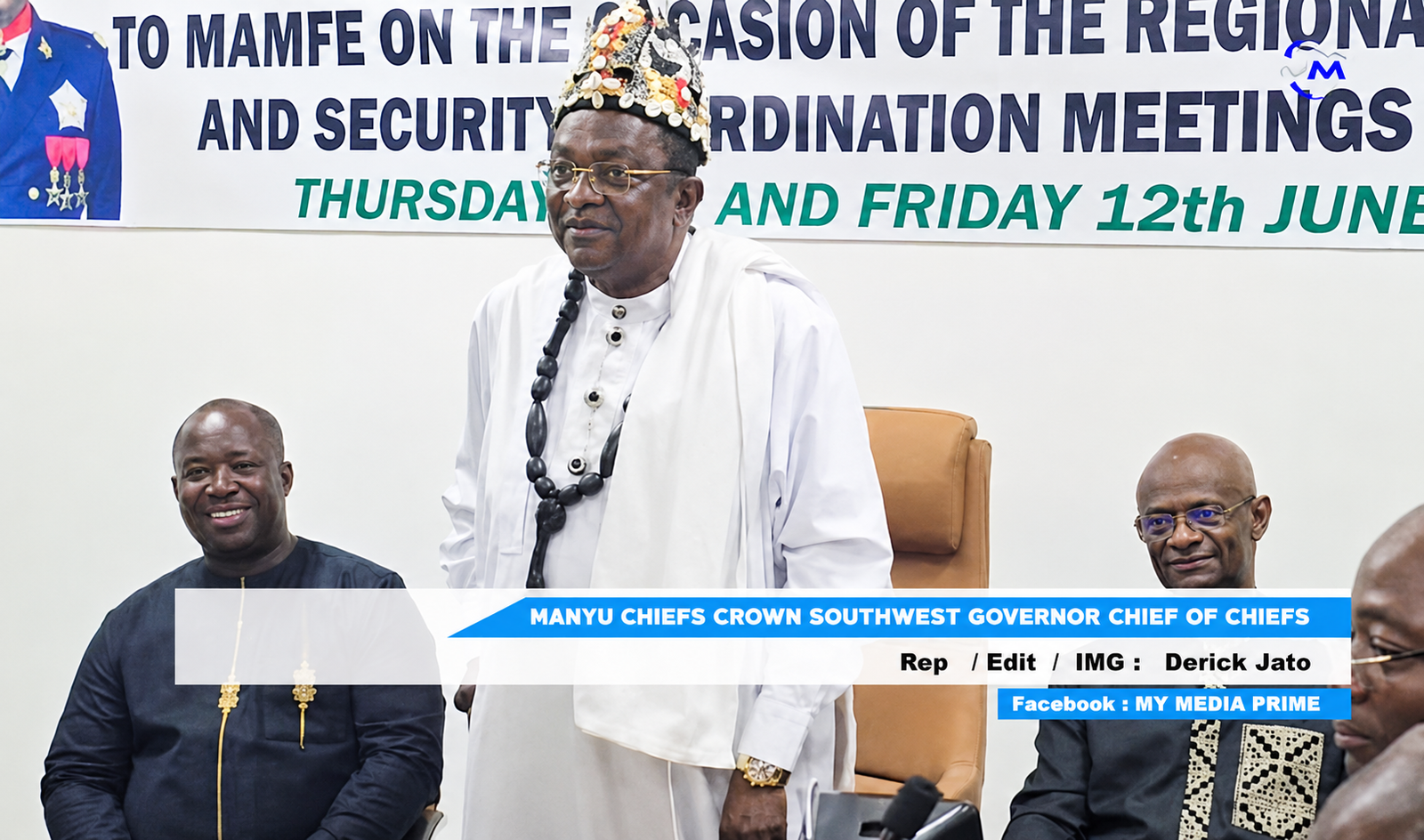
On the sidelines of the regional administrative and security coordination meeting held in Mamfe on June 11 and 12, traditional rulers of Manyu Division conferred upon the Governor the title of “Nfor Ba Nfor,” which they explained translates to Chief of Chiefs.
Dressed in the full chieftaincy regalia of Manyu, the Chief of Mamfe, HRM Dr. Godson Orock Oben, took the floor to elaborate on the significance of the honour, declaring that the Governor now stands above all traditional rulers in the division. “As the Governor enters into Manyu Division, we are all his subjects, not only his peers but his subjects, because he is above all of us put together,” Chief Oben stated.
The chiefs justified their decision by crediting Okalia Bilai for his developmental efforts amid the nine-year armed conflict engulfing the Northwest and Southwest regions, specifically pointing to the construction of the Kumba-Mamfe road, which they said had been a source of hardship for years. (Note that governors are not development agents. They are appointed to run administrative issues and follow up on behalf of the ministry of Territorial administration that does not carry out any infrastructural development). One traditional ruler told the press that the road, which links Manyu to other divisions, was reason enough to bestow the honour, adding that there was a genuine need to recognise the Governor’s contributions.
The gesture represents a remarkable turnaround in the Governor’s relationship with the traditional institution, which had soured dramatically in April 2019 when he ordered all Buea chiefs to march with placards during the National Day parade and threatened to dethrone those who disobeyed. He threatened them intimating that they all know how they became chiefs and could be easily replaced with those who comply. At the time, traditional rulers condemned the order as demeaning and insulting, with many choosing to boycott the event in protest.
The current wave of honours is particularly jarring for many Anglophones who have not forgotten the Governor’s inflammatory rhetoric at the onset of the crisis. In September 2017, he took to CRTV radio to warn that security forces would deal with “dogs” that continued to go to the streets, a dehumanising reference to protesters who had come out massively. He also called on elites and community leaders to “chain their dogs,” a statement widely interpreted as a directive to control restless populations, further poisoning his standing among ordinary citizens.
While traditional rulers now insist the title is a mark of genuine gratitude for infrastructure development, social media and public discourse have been flooded with disbelief, with many questioning how a figure associated with such divisive language and heavy-handed threats could be elevated to the highest echelon of traditional authority. Critics argue the move rewards a history of antagonism and sends a troubling message at a time when the Anglophone regions are still grappling with the scars of conflict.